This new media cooperative invites the community to join us on our journey of creation

Welcome to the Pittsburgh Progress, a news organization forged by a team of union journalists and community members. That’s us. We own this thing. It’s a cooperative. You can be an owner, too. You should. We don’t have to live in a world dominated by media companies focused on fattening the wallets of a few at the top while workers and communities pay the price. The Progress proves that point.
This edition is our first, and contains a handful of stories about people, places and events shaping our communities. We’ll continue to publish occasional stories in the coming weeks as we work toward becoming a more robust online media outlet. Each story will reflect our mission: to serve as a source of communication and connection that reflects the needs of working-class people in the region.
Many of us on the Progress team are union journalists, members of the Newspaper Guild of Pittsburgh. We’re here after enduring a long and grueling strike against the Pittsburgh Post-Gazette that started in October 2022. That experience of battling an employer intent on stripping away our agency led us to this moment, and the lessons we learned played a big role in shaping the Progress.
The PG’s owners, members of the Block family, had hired a high-priced, union-busting law firm from Nashville to do their dirty work. Newspaper managers then tore up our contract in 2020 and imposed onerous work rules and conditions — a clear violation of federal labor law. Attorneys stonewalled us in bargaining sessions that went nowhere. They seemed convinced we’d eventually run out of money or resolve. On the streets, managers called the cops to break up our picket lines. Drivers threatened to pull guns on us. After one picket a company goon rampaged through a nearby gas station in search of our current local president, Andrew Goldstein. The ramped-up security dude instead confronted one of our supporters, whom he mistook for Goldstein.
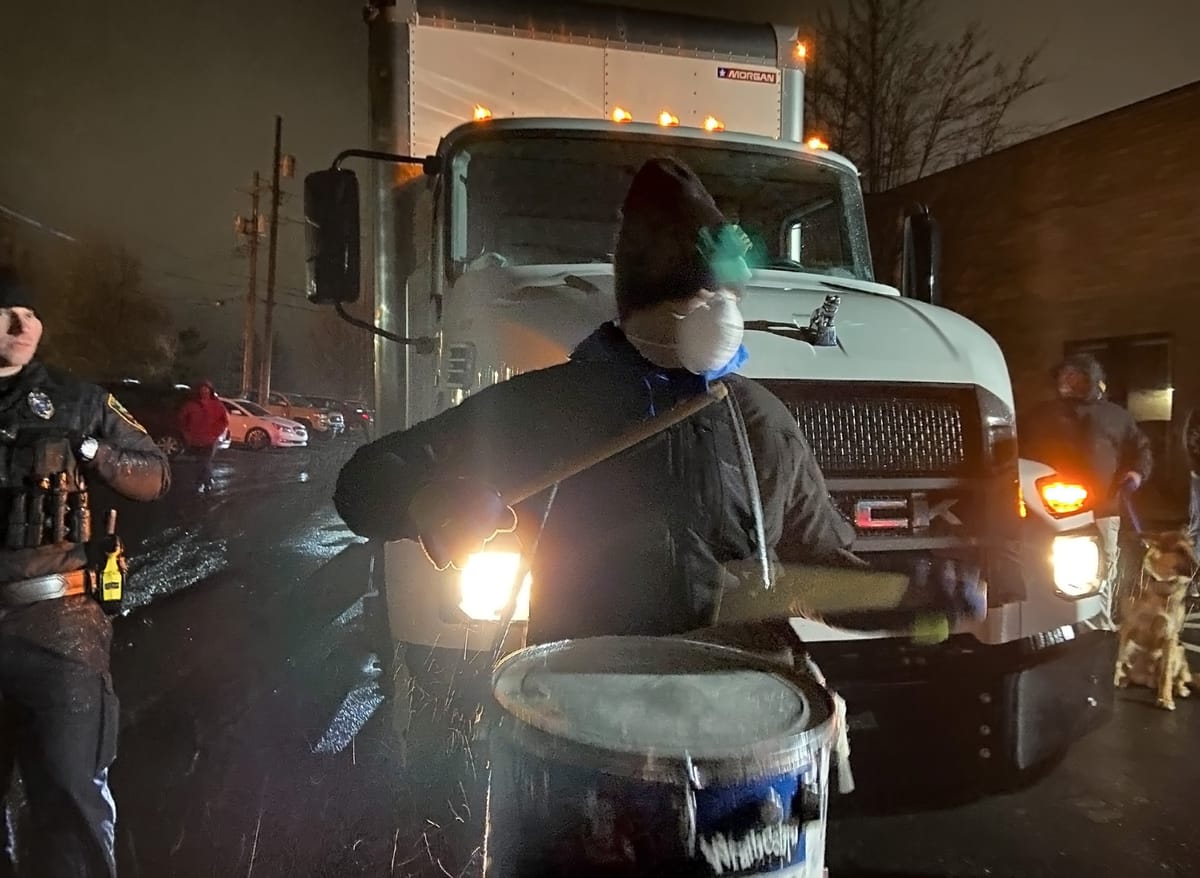
We survived it all because a community rose to support us. Many of those supporters are now on our team. They sent us notes of encouragement and gift cards, organized fundraising events with us, invited us to speak to the organizations they represented so we could tell our story. Many joined us in the cold rain as we manned those late-night picket lines, blocking the delivery of scab-produced newspapers at distant PG depots. Those were moments of exceptional solidarity, standing with our supporters, inches from the filthy grill of a rumbling diesel truck while a PG manager standing on the running board urged the driver to go forward.
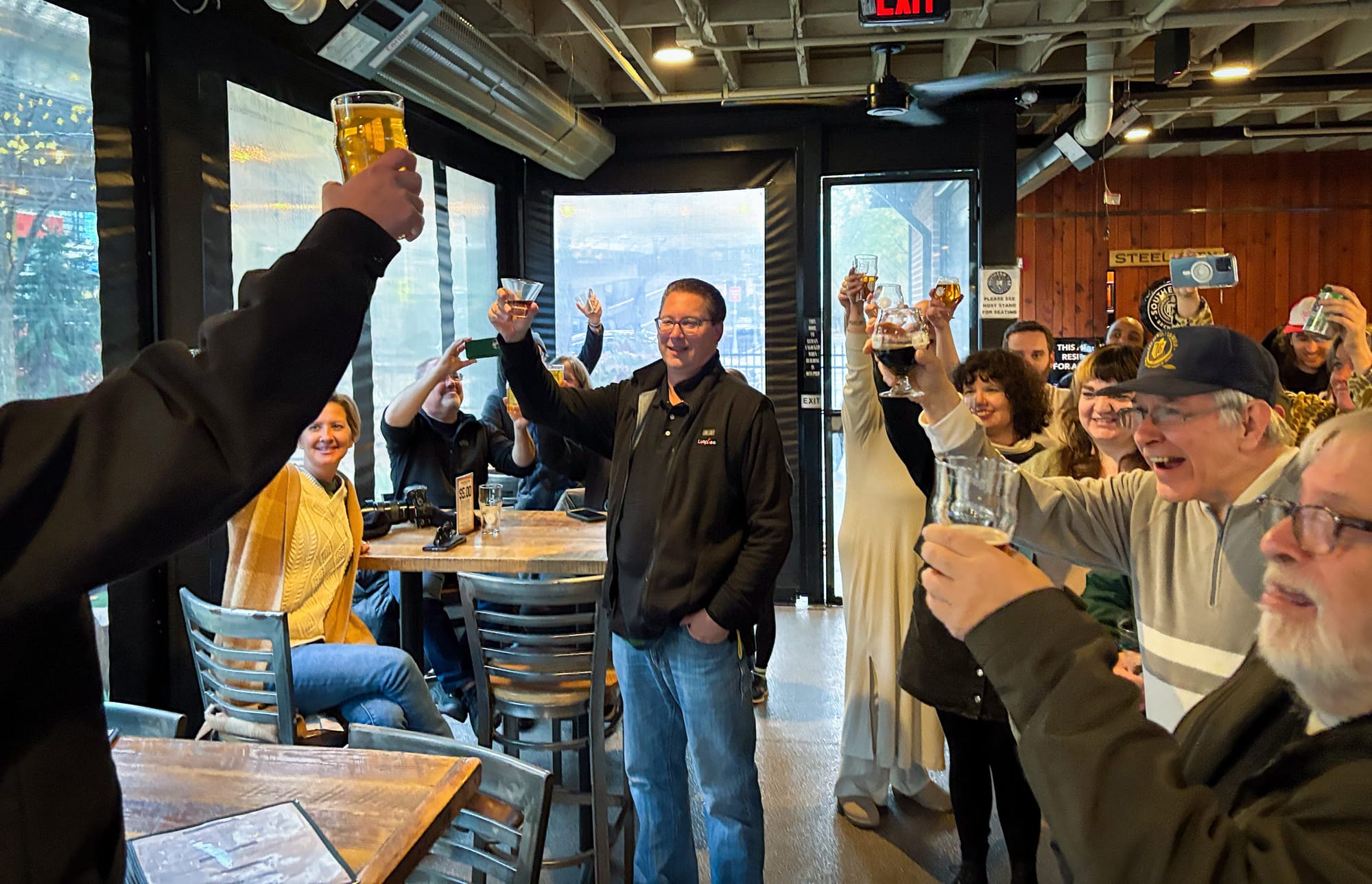
Our strike ended last November on one of the most joyful and exhilarating Mondays we’d experienced. A federal appeals court in Philadelphia had ruled in our favor early in the month. This left the PG with no other options. The newspaper’s owners had failed in their law-breaking attempt to crush its workers and their union.
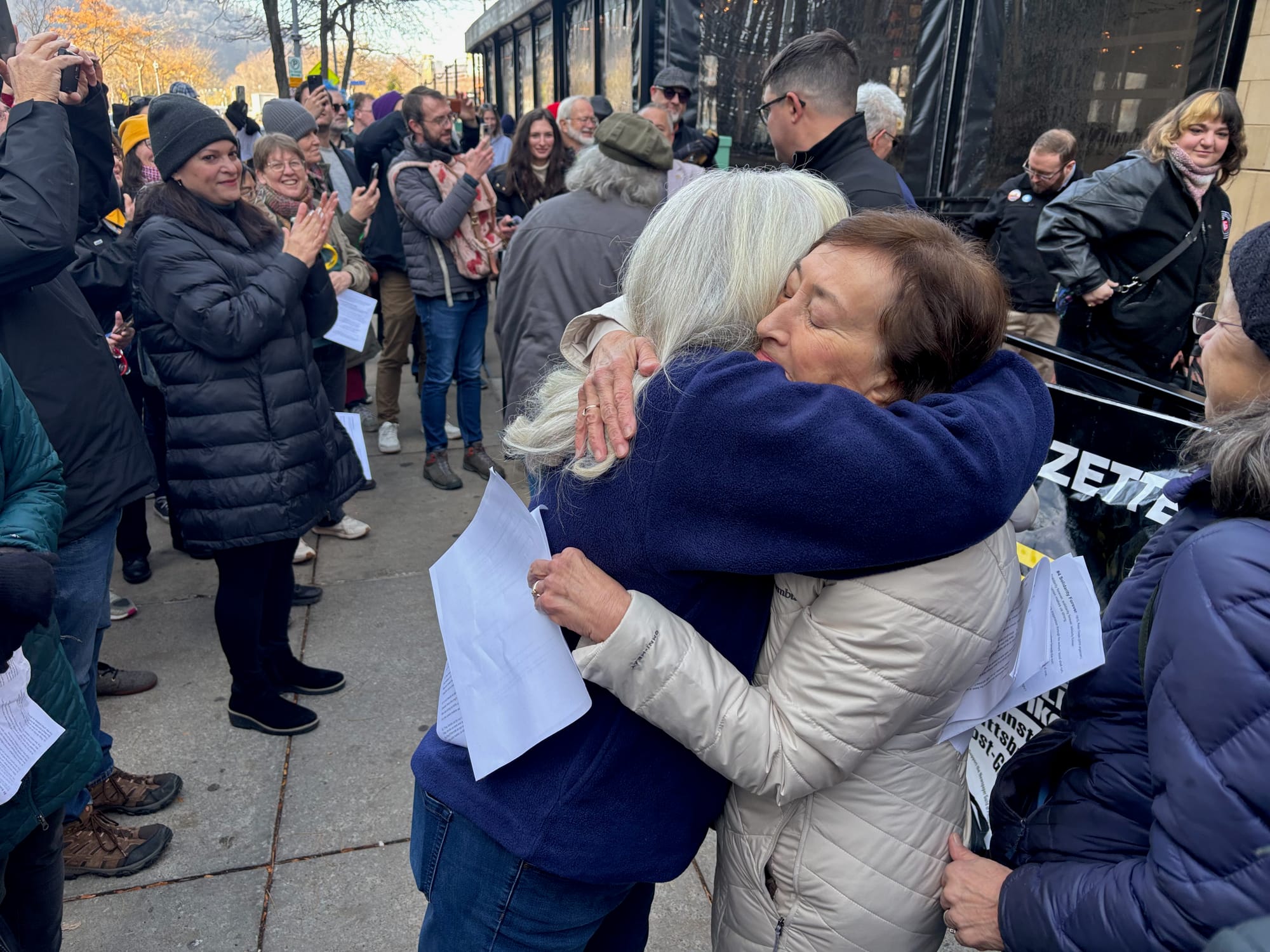
More than 100 supporters joined us as we gathered on North Shore Drive to celebrate our return to work on the morning of Nov. 24, 2025. The rally began with a singalong led by our friends in the Pittsburgh Labor Choir. We cheered, raised our fists in victory, and then marched to an entrance leading to the newsroom while the crowd sang words penned by Woody Guthrie, “You can’t scare me, I’m sticking to the union, I’m sticking to the union.”
We felt like Franco Harris blazing into the end zone after the Immaculate Reception. The long battle in the trenches, the teamwork, the failures and disappointments, the times we picked each other up after getting bloodied — It all culminated in this unbelievable scene. Goldstein led us to the building entrance, then swiped his employee ID card across a sensor. The door clicked open, and we entered the newsroom with our rights and dignity secure. We will forever cherish that moment.
Things went surprisingly smooth, considering the acrimony generated during the strike. Union journalists and their managers treated each other with professional respect. Striker Rob Joesbury, a sports copy editor, was encouraged, even excited, when his boss asked, “Did you like your old job, or would you want to do something different?” And of course we were thrilled to see paychecks once again land in our bank accounts.
For more than seven weeks, it seemed we’d entered a new era at the Post-Gazette. Workers and managers focused on producing solid journalism, and our bosses worked with union leaders to resolve conflicts.
It all fell apart on Wednesday, Jan. 7. Most of us were on the job that day, either reporting in the field or at our desks at home or in the newsroom, when our phones buzzed with news that the U.S. Supreme Court had denied the PG’s request for relief on a healthcare issue that was part of the strike.
We paused for a moment of quiet celebration. The PG had failed in its last desperate attempt to undermine our victory. A short time later our phones buzzed again. This time it was the company, alerting us to a hastily scheduled online meeting. Attendance was mandatory.
This seemed odd. What was the company up to? Considering the timing, some of us thought the PG would announce layoffs.
We braced ourselves and logged into the meeting. We stared at blank screens. Nobody from the company emerged to welcome us. Minutes passed. Then a video blinked into view. A company representative unfamiliar to nearly all of us stood against a plain wall and announced the Post-Gazette would close May 3. Until then, we were expected to work under “business as usual” conditions. “Consider the legacy of the Post-Gazette,” we were told. The Block family “would like to exit with grace and dignity.”
The message ended abruptly after little more than two minutes. No manager stuck around to answer questions. Our screens simply went dark.
We were stunned and bewildered. How do you process such news, especially if you’re alone in your home office or sitting in your car after taking a break from your reporting? “Even though we won the strike,” Joesbury thought, “we’re going to lose in the end because the people with money always win.”
Our despair over the owners’ despicable action soon gave way to determination. “I just felt this immediate motivation to do something about it,” said former striker Erin Hébert, a Post-Gazette editor and first vice president of the Newspaper Guild of Pittsburgh. We had more than three years of organizing experience, thanks to the strike. We’d also learned to overcome setbacks. We knew what to do, so we went to work.
We met with dozens of organizers, members of other unions, activists and folks who’d supported us during the strike. We collectively decided the Pittsburgh region needed a news publication free of toxic owners.
Our growing, informal group formed a research organization called the Pittsburgh Alliance for People-Empowered Reporting, or PAPER. We held a press conference, raised a bit of money and began learning everything we could about independent media. How would we structure a new media organization so it’s inoculated against the overwhelming forces of greed, power and politics that poison so many other news organizations? How would we generate revenue?
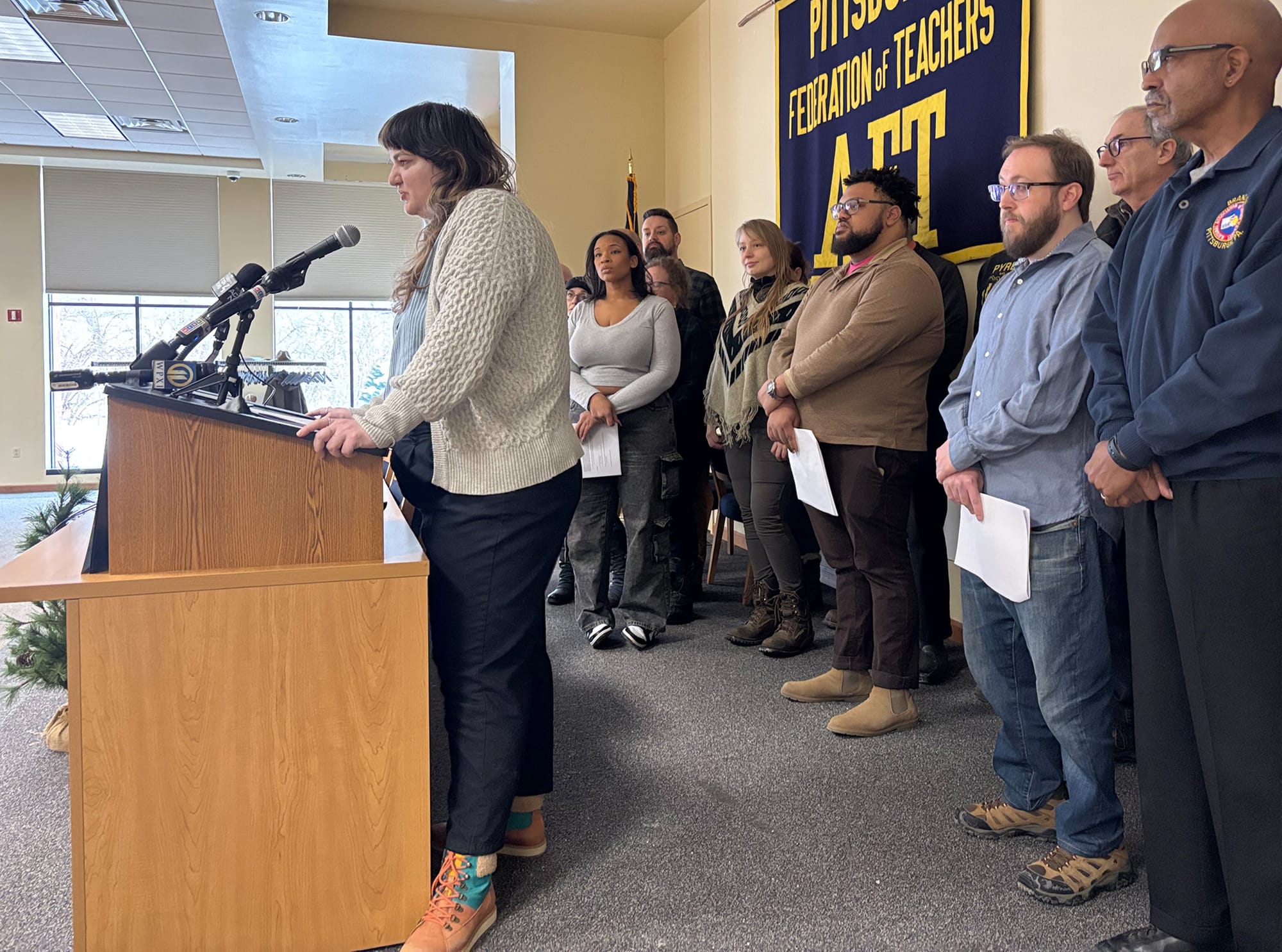
After dozens of meetings and discussions, we decided to pursue a worker- and community-owned daily news outlet — a multistakeholder cooperative. Setting up such a co-op is complicated. The Keystone Development Center helped us navigate the process. Several community stakeholders joined the effort. Key were Jacob Klinger, our NewsGuild organizer, as well as Ron Gaydos of KDC, Lindsey Disler, Ross Tedder, Sara Bauknecht, Chris Strayer and Tanisha Long. We could list dozens of other people who offered suggestions and advice. At one of our online meetings, we counted 150 people in attendance.
To help us build our website, we hired Sassafras, a unionized, worker-owned technology cooperative. We worked with XSquared Media to develop a social media strategy.
May approached. Less than two weeks from the PG’s closure date, managers again slapped us with unexpected news: The newspaper had been sold to a Baltimore-based nonprofit called the Venetoulis Institute for Local Journalism. The new owners, we were told, would be contacting us to set up job interviews.
In the end, Venetoulis purged the staff of all but a handful of former strikers, an action that only reinforced our belief that we could count only on ourselves and our community. That was fine with us. We’d grown increasingly excited about the potential of a news publication owned by workers and supporters.
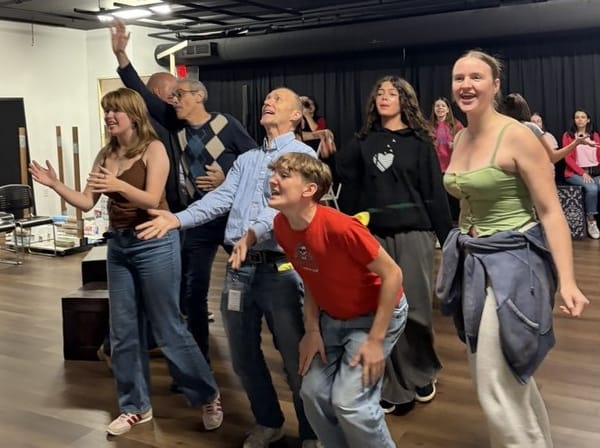
We held two town hall sessions, the first at 1Hood Media’s Black Box Theater in Oakland and a second at Homestead United Presbyterian Church, and we heard directly from our neighbors. We worked with Brendan Miller, who made the posters for our town halls, to design a logo and got to work on a website and marketing plans. We spent hours discussing a name, finally settling on the Pittsburgh Progress in honor of the Pittsburgh Union Progress, or PUP, the online newspaper we’d published during the strike.
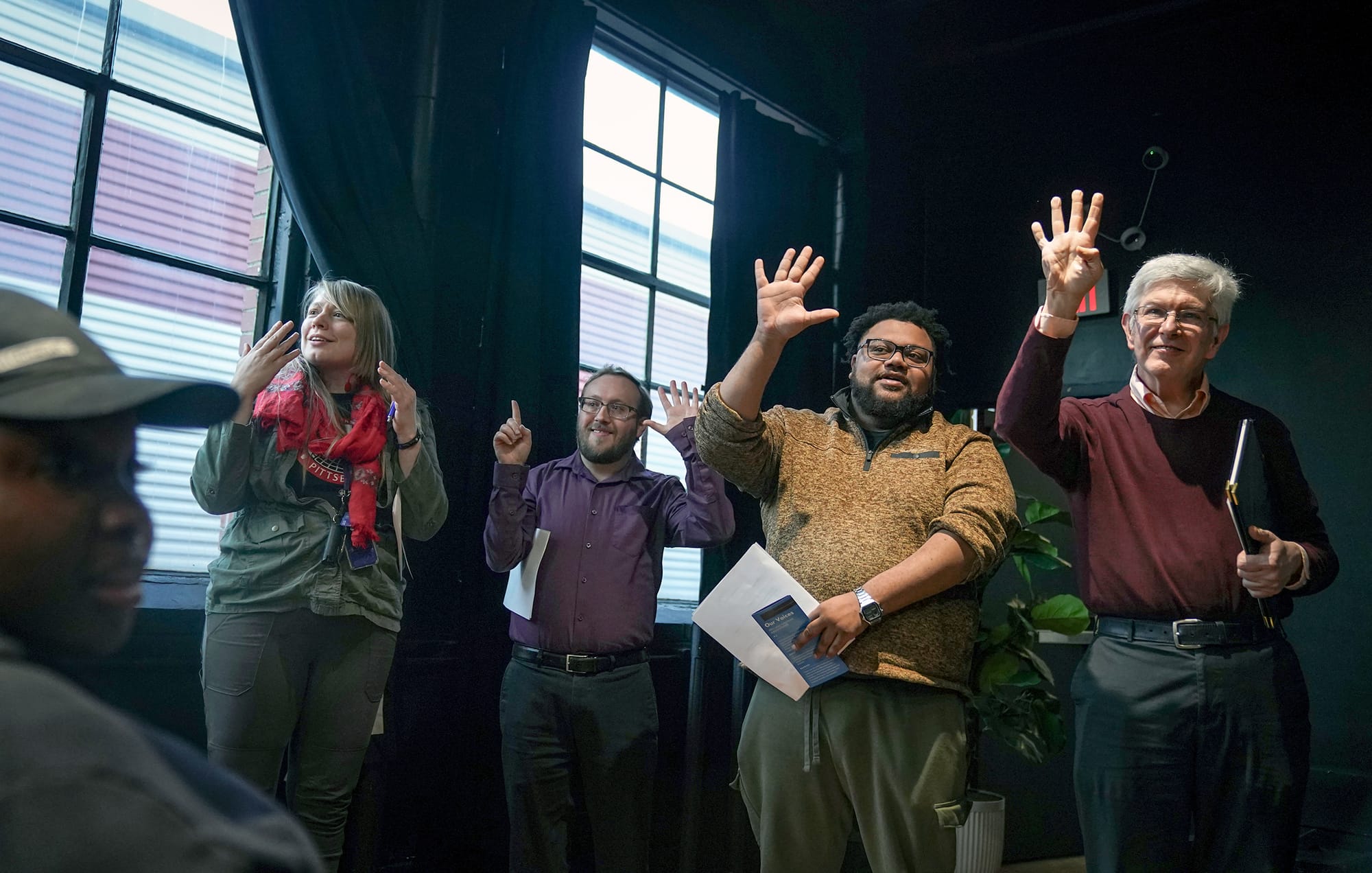
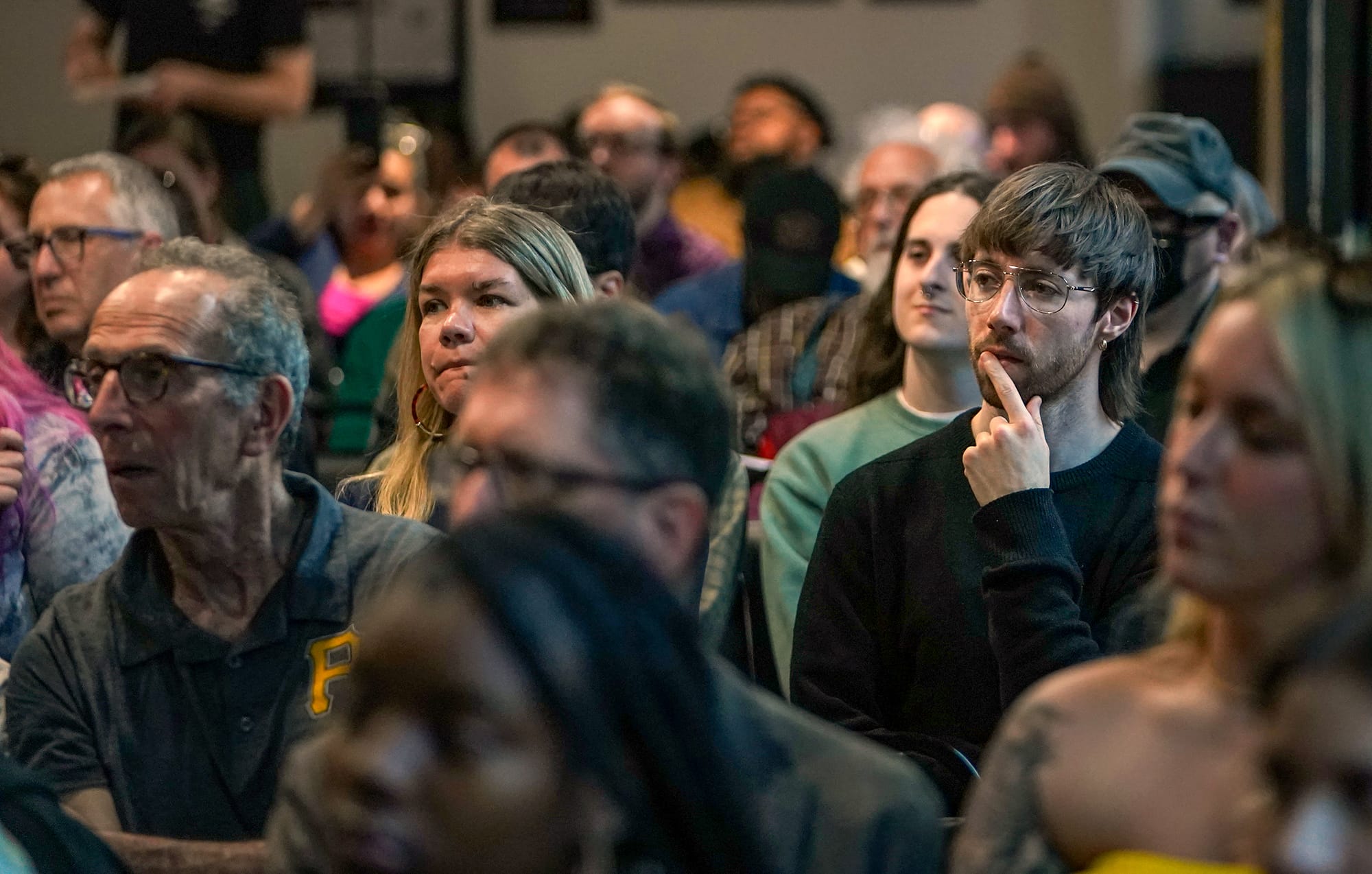
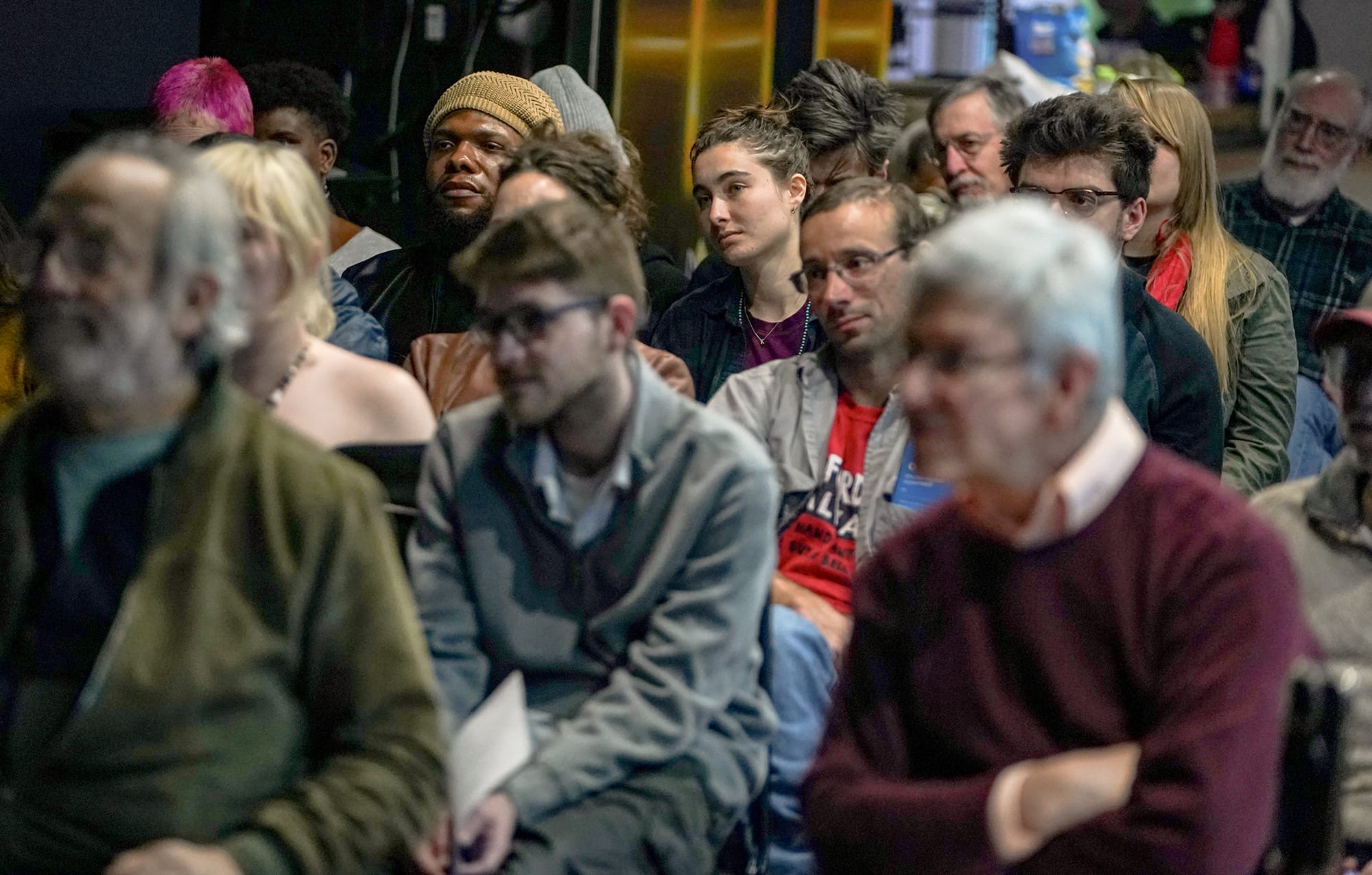
At left: Founders of the Pittsburgh Alliance for People-Empowered Reporting count off while preparing for small group discussions during a town hall meeting on April 8, 2026, at 1Hood Media's Black Box Theater in Oakland. At center and right: Community members take part in that town hall meeting. This gathering and a second town hall meeting in Homestead provided information used in the formation of the Pittsburgh Progress. (Newspaper Guild of Pittsburgh)
Our publication's goal: to reflect the concerns, struggles, hopes and dreams of blue- and white-collar workers. That’s a wide range of folks, from baristas to university workers to roofers, as well as those who can’t work because they’re caring for elderly parents or children or because of a disability.
It includes anyone who glances at a personal bank account, then at a monthly stack of bills and wonders, “Who the hell is hoarding all the wealth this country is generating?”
We’re proud of the publication we’re building. The Pittsburgh Progress stands as a worker and community response to the actions of Post-Gazette owners and managers before, during and after the strike. The Pittsburgh Progress belongs to its workers and its community. It’s yet another example that we can accomplish extraordinary things when we work together.
We’d like you to be a part of this new venture. Hit the button below to learn how.
This article originally published on July 27, 2026, at 8 a.m. EDT.