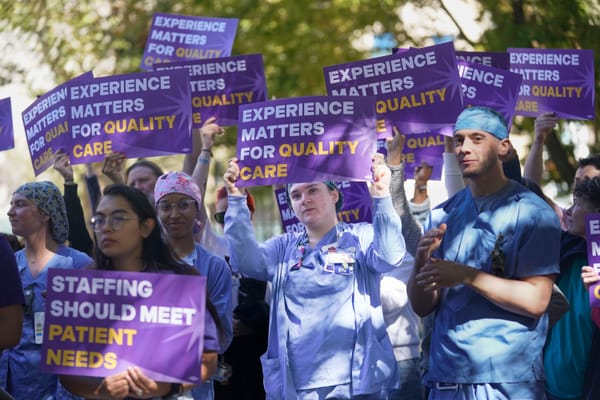
CCAC faculty authorize strike after offer of pay raises with 'strings attached'
Current wages lower than comparable positions at other Pennsylvania community colleges, administration-approved study finds

Faculty members barely approved their last contract with Community College of Allegheny County three years ago, said Stephen Bannister, president of the faculty union, citing the "low" pay raises.
But one of the deal's key provisions, he said, was to have an outside consultant conduct a study comparing CCAC's wages with those of other community colleges in Pennsylvania.
“When we did that, the goal was, in the third year of the previous contract, the pay raise would be adjusted based upon what [the study] said. That was the goal and intent,” Bannister said. “Well, it came back a lot higher than what the college wanted, so that did not happen.”
That contract expired on Aug. 31, and the sides remain divided on wages even though negotiations started in the spring, according to Bannister. It is one of the key issues for the American Federation of Teachers-represented faculty, which last month voted 96% in favor of authorizing a strike.
The vote does not guarantee a work stoppage will occur, and Bannister said he could not share whether a strike will be called. He did say, however, that the overwhelming approval of strike authorization shows the faculty are serious about fighting for better working conditions.
“It confirms what we already knew, which was people were very frustrated and tired of being overworked and underpaid,” Bannister said. “I take it as a mandate that we’ve got to do something about this.
"We’re not doing this anymore.”
In a statement, a spokesperson said CCAC was committed to negotiating a contract “that provides a fair compensation package to all members of our teaching and non-teaching faculty.”
“The college also remains steadfast that any new CBA must also deliver fair value to the college’s students and to the citizens of the Commonwealth of Pennsylvania and Allegheny County whose tax dollars fund this enterprise.”
Bannister said the study, conducted by Bolton Consulting, showed full-time faculty wages “were significantly below everybody else.” He would not share the study with the Pittsburgh Progress but did, however, provide an analysis performed by the union that he said produced the same findings.
The analysis, compiled from publicly available data, showed the minimum starting salary at CCAC to be $46,781. The Community College of Beaver County and Butler County Community College’s minimum starting salary was $48,000, and Westmoreland County Community College's was $60,000.
The teaching workload was the same at all four schools: 15 credits (five three-credit courses) per semester.
Also, according to the analysis:
The only community college with a lower minimum starting salary than CCAC was Luzerne County Community College at $45,000. The average minimum starting salary for community colleges in the state was $54,533. The Community College of Philadelphia had the highest minimum in the state at $75,981.
The total compensation at CCAC when factoring in the maximum possible overload pay was $81,121. That figure was higher than Beaver County's but less than Butler and Westmoreland county’s community colleges. The average total compensation at community colleges in the state was $88,016.
Bannister said he understands CCAC’s significance to and role in the local economy, sending students into trades and careers that are vital to the region. He said he hopes a strike can be avoided, but that CCAC faculty cannot continue to remain among the lowest paid in the state.
CCAC has offered higher pay during this round of bargaining, Bannister said, but it comes with “strings attached.” The union president declined to share specifics, but that often means workers shouldering a higher percentage of health insurance costs or an increased workload.
The low pay has led many faculty members to take on “side hustles,” Bannister said. Some of those involve more teaching or other work at CCAC, while others include outside jobs, which the college monitors closely, he said.
“The reason they have all of these other outside commitments is because they get paid so poorly here,” Bannister said. “We’re in total agreement that if this is your full-time job, this is job No. 1, and it should be given that type of attention. But I can see why people need to go out and look for additional sources of income. We would rather they be paid well enough that that’s not necessary.”