We searched through Pittsburgh for meaning after last week's election and found optimism, but dang, there's lots to fix
The Pittsburgh Progress spoke with people on the ground who've had a close-up view of their communities' struggles over the past several years

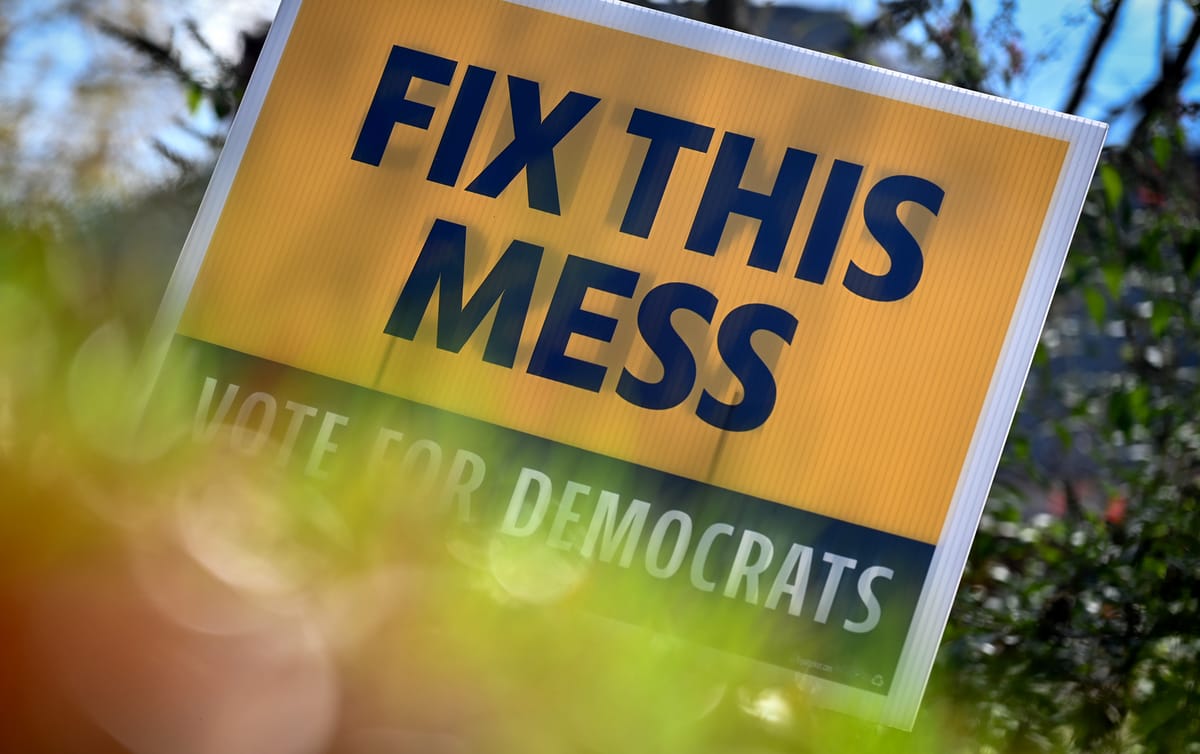
In the week since voters wiped out Republican majorities in both houses of Congress, we’ve listened to dozens of political podcasts and cable TV analysts, all yakking about the meaning of the most stunning political realignment since President Richard Nixon slithered out of the White House in 1974.
We heard a lot about the Texas pivot from red to blue, the folly of the GOP gerrymander and speculation about all the things President Donald Trump will name after himself now that he's a lame duck. Maybe the Earth itself?
This was all very enlightening, even entertaining, but after a while we remembered our calling – to focus on folks in the Pittsburgh region. So, we unplugged our headphones, turned off the TV and headed outside to find a few of our neighbors who work with and represent communities who’ve fared poorly under the political leadership we’ve experienced the past several years.
On the South Side we bumped into Rita Porterfield. She's a senior investigator for the City of Pittsburgh’s Commission on Human Relations, a member and trustee of AFSCME Local 2719 and a 9th Ward Democratic committeewoman. She was feeling good about the election results.
“I'm encouraged because people could have picked fascism,” she said, “because that's also what was on the ballot. And voters showed up overwhelmingly for compassion towards other people.”
What should all these newly elected leaders do when they take office in January? Porterfield said she’d like for Congress to resurrect and pass the Protecting the Right to Organize Act, a piece of legislation that would make it easier for workers to form unions and bargain together for changes in the workplace. The House has passed the bill multiple times only to see it stall in a Republican-led Senate.
“I think we fix things first through labor organizing,” Porterfield said. “We ensure a fair workplace so people can feed themselves, so people can work. I think we start with those pro-labor policies. Then we move on to healthcare.”
Congress should pass legislation establishing a single-payer health care system, Porterfield said. “Make Republicans take those hard stands," she said. "They’re either going to work with us or they're not. Make Trump take those hard stands.”
Do Republicans accept the era of a "continued New Deal, with civil rights?" Porterfield asked. Do they “take up the call of taking care of our neighbors?”
Trump succeeded in creating divisions between the country’s working people, pitting rural and blue collar workers, for example, against those white-collar workers such as teachers and researchers. Those divisions make no sense.
"That's one thing I think that we really fail to recognize,” Porterfield said. “If you depend on a paycheck, you're in the working class. And that's not a classist argument. That's not about anything other than, 'We're in this together.' ”
Every profession is essential, Porterfield added. Even if we lived in a world where everyone had a professional degree, we'd still require sheet metal workers and auto workers, carpenters and computer programmers, and office cleaners.
“There is too much work to be done to bicker over whose work is more important,” Porterfield said. “We only work when we all work together. … It's cooperation that makes democracy successful.”
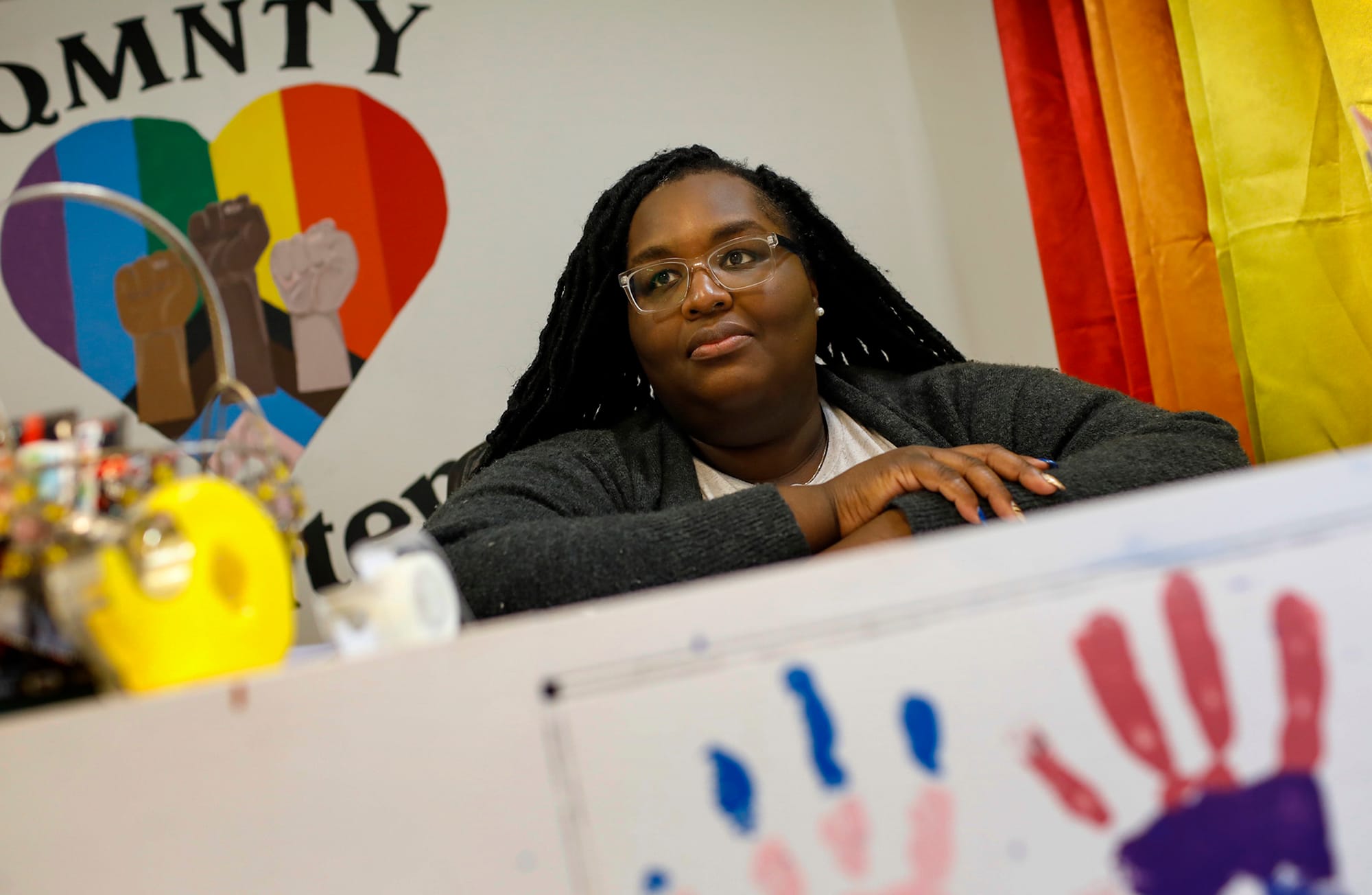
When cable stations like CNN and MSNBC displayed pictures of the winners on election night, viewers saw faces that reflect the reality Dena Stanley sees every day. Stanley is founder and executive director of Trans YOUniting PGH, an organization that advocates and provides resources primarily for the transgender and LGBTQIA+ communities. It's a trans-led organization, Stanley said, "but we work with everybody." She was still excited about the diversity of newly elected leaders when we caught up with her at the organization's North Side community center.
“Even just thinking about it, it's still emotional,” Stanley said. “I never thought in my lifetime I would be able to see America, true America, represented in our government, ever.”
Michigan voters are sending a Muslim man to the U.S. Senate. Georgia voters elected a Black woman to be their next governor. A trans woman is headed to the Alabama House of Representatives. Alabama!
Stanley sounds optimistic when discussing the reasons Americans decided to send so many new faces to places of power.
“Because the Orange Man is doing all of the damage he is doing, and because of all of the hate that's being spewed, more individuals than ever who have never voted before are saying, ‘You know what, I think this is the time for me to stand up and make my voice heard.’ And that's what happened.”
Expectations will be high when all of these new faces take office in January, maybe too high. A lot of people believe the country is a wreck. They can’t afford rent. They can’t afford healthcare. Many depend on SNAP benefits, which have been slashed, and millions are facing Medicaid cuts mandated by the Republicans' Big Beautiful Bill. Those cuts take effect in January.
Trump and his buddies created a lot of damage the past few years, Stanley said. “I just hope people understand this is not going to be an overnight fix.”
What should Congress tackle first?
“We’ve got to deal with the looming cuts to Medicaid,” Stanley said. “There are going to be so many people impacted by that. So many children are not going to have healthcare. So many lives are going to be lost because of this.”
Next, we caught up with Imam Chris Caras of the Islamic Center of Pittsburgh. He was leaving the Allegheny County Jail, where he meets with Muslim inmates each month. Caras is a bit skeptical that the election will bring about meaningful change.
“I’m not really optimistic, but I am less pessimistic,” Caras said.
He does not expect the election of Abdul El-Sayed of Michigan as the first Muslim U.S. senator to have a major impact. He’s one senator of at least 54 in the Democratic majority. How much can one man do to change minds and attitudes? As an example, Caras offered the push for a Medicare-for-all, single payer health care system, which El-Sayed supports.
“I’d like to see it in America,” Caras said. “Other developed nations have similar programs, but I don’t trust it's going to happen in America in my lifetime if things stay the way they are. Many politicians prey on the hopes of their constituency, but once they get to Washington, they change their tune.”
“It’ll be two more years of gridlock and status quo, which is better than spiraling the drain,” Caras added. “I believe the Democratic Party is going to find a way to keep the status quo. I don’t believe they represent the people very well. The Democrats, even though I vote for them usually but not always, it’s difficult to even understand what they stand for other than controlled opposition.”
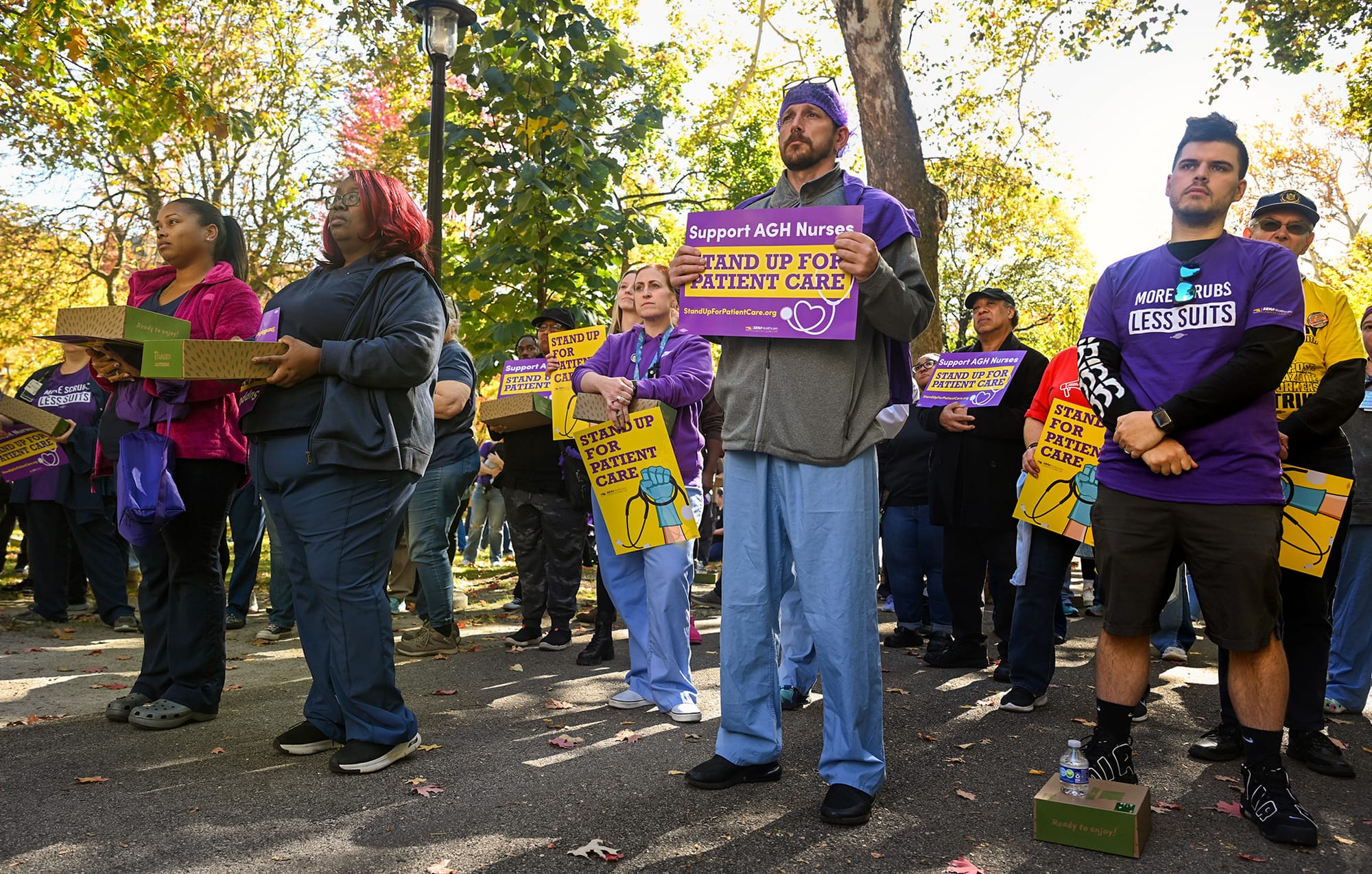
Union nurses in the Pittsburgh region have been especially active in recent years, successfully organizing and bargaining contracts at the Pittsburgh region's major hospitals, so we reached out to Matt Yarnell, president of SEIU Healthcare PA, a union representing more than 40,000 nurses. The union’s priorities at the federal level, Yarnell said in a statement the union sent to us, include passage of the PRO Act and reversing Republican cuts to healthcare.
But Yarnell’s comments focused mainly on priorities on the state level. Democrats in Pennsylvania achieved a trifecta this year by re-electing Gov. Josh Shapiro, maintaining control of the state House and flipping the state Senate.
Yarnell said the union’s priorities in Pennsylvania include passage of the Patient Safety Act, which sets minimum nurse-to-patient ratios for the state’s hospitals and makes sure every worker has the freedom for form a union. That includes home health workers who care for seniors and people with disabilities.
Yarnell said SEIU Healthcare PA is also urging passage of a plan called Tax Billionaires, Fund PA, a revenue proposal that includes closing corporate tax loopholes and taxing the unearned income of billionaires. The billions raised through this plan would fund schools, healthcare and housing.
“A critical part of that package is the Medical Assistance Accountability Act, which requires corporations to contribute their share to Medicaid if they pay workers so low they can’t afford healthcare,” Yarnell said.
Yarnell said frontline healthcare workers and the communities they serve are ready to work together to push forward an ambitious legislative agenda. “United together, we’re determined to make sure the needs of patients, home care consumers and nursing home residents come before corporate greed and all working people can afford the American dream," he said.
This story will be updated by Pittsburgh Progress reporters.