I was a poll worker for the midterm election: why you should be one, too
It provides a behind-the-scenes look at how elections are run, promotes confidence in the process and fosters a sense of community with neighbors
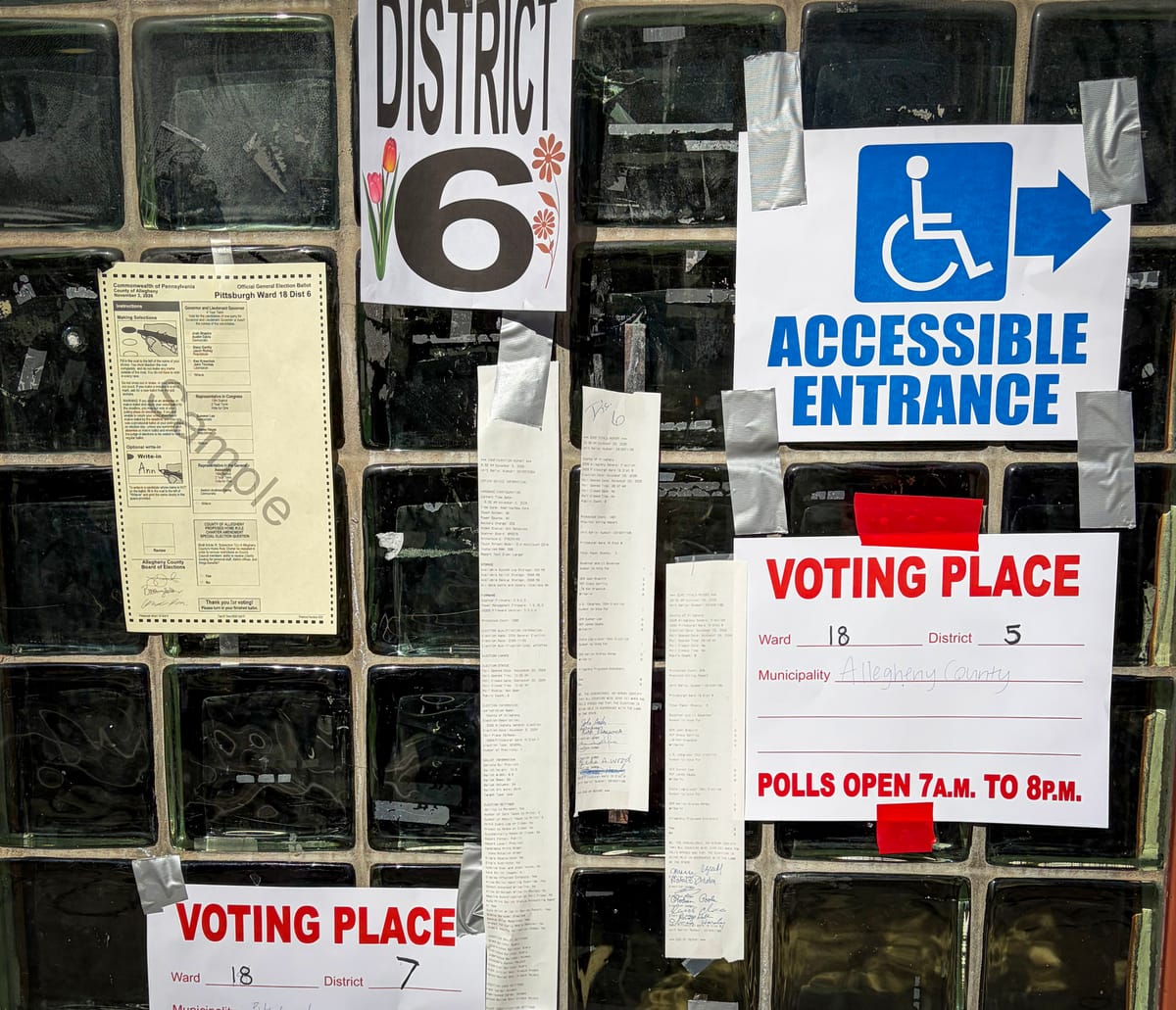
I first worked the polls for the primary election earlier this year. I had never been able to, as it’s a substantial time commitment – 6 a.m. to as late as 9 p.m. on the day of the election. The average worker would have to take time off to do so, and there’s no option to work only part of the day.
But in May, I was no longer a full-time employee of the Post-Gazette. I was among the 80% of former strikers not hired by the new owners, the Venetoulis Institute for Local Journalism. I had the entire Tuesday to do as I pleased. I also knew that working the polls came with a paycheck, and any money is good money when you don’t have a job. (The pay is $150 for the 15-hour day, and you also earn $20 for completing the two-hour training ahead of time. The training is mandatory for first-time poll workers, and Allegheny County offers in-person and virtual training.)
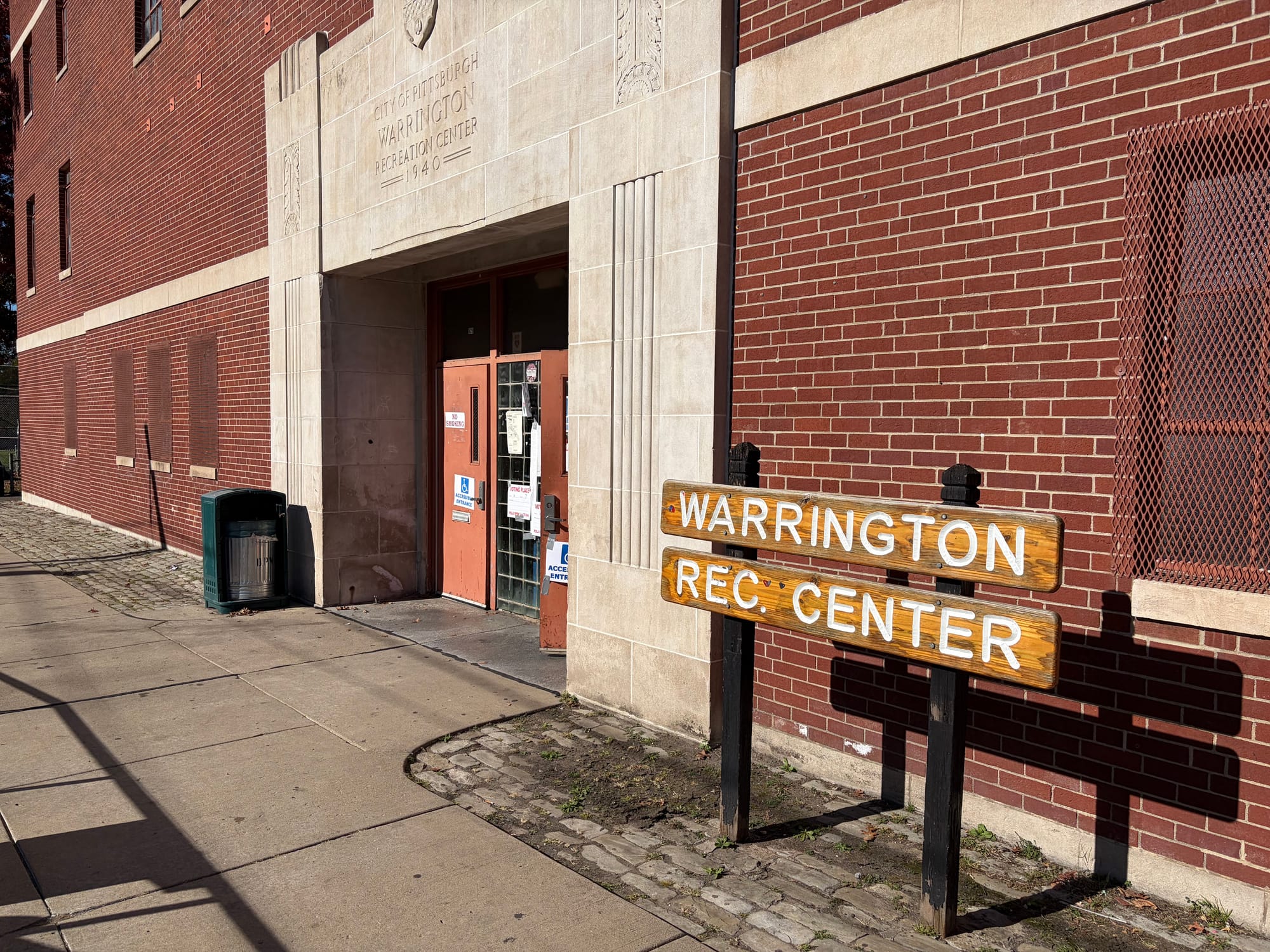
Poll workers report to their assigned station before sunrise at 6 a.m. — I did so both times with a mug of black tea in hand. Others brought cans of energy drinks. My voting place, and where I worked the polls in May and on Tuesday, is the Warrington Recreation Center in Pittsburgh’s Beltzhoover neighborhood. When the door is unlocked, all the workers converge on the space, moving tables and setting up the machines, sorting paperwork and making sure that the day’s first voters can fill out their ballots when the polls open at 7 a.m.
In May, I was not the only first-timer at Ward 18, District 5. The judge of elections and majority inspector were newbies, as well. While many of the titles given to poll workers don’t amount to much distinction, the judge of elections for the district is the person in charge. Pennsylvania elects its judges of elections and majority and minority inspectors, which no other state does, according to Spotlight PA. (Judges of elections are paid $175 for the day and must have a vehicle to transport election materials back to the county.) The positions are four-year terms; elections were held for those positions in 2025. Many of those positions don’t have any candidates on the ballots and go unfilled. When a position is unfilled, the counties appoint people to fill it as I was in May as minority inspector.
On both election days, I had completed my online training the day before, so the information was fresh. Still, it is overwhelming in the first hour with the scraping of metal table legs, the bustling of posting signs and the call-and-response of workers coordinating the setup. The equipment has a step-by-step process; the paperwork has one, too. It needs to be followed in order, and the chain of custody of all the parts is recorded in quadruplicate, with more than one poll worker signing off on the information. (In some cases, all of the poll workers sign their names.)
But we were ready on both election days for the first voters to come in the door. On Tuesday, we managed to do this even though we weren’t let into the building until 6:15 a.m. The veteran poll workers of the other two districts housed in the recreation center told us in May that my district would likely see the most voters. It held true: Over the course of that day, 101 voters cast their ballots.
On Tuesday, that was still the case, but we hit that number before 11 a.m. Multiple voters were at the door before 7 a.m., and a steady stream of people found their way to our table before going to work. The final count from the DS200 voting machine was 330 for District 5.
But even that number was lower than other districts across the city. Several of my friends signed up for the first time to be poll workers for the midterm elections. (I like to think that my tales of the primary election inspired their civic-mindedness.) Another friend became the judge of elections for her district in 2025 after serving as a poll worker for several years before that. One friend, who worked in the neighborhood above Frick Park, reported over 500 in-person voters had come through her polling place’s door.
Those numbers are nothing compared to a presidential election year, a judge of elections from another district in my building told me. The lines then are out the door. Even though that’s still two years off, I look forward to the rush. I also plan on working again for the municipal elections in 2027.
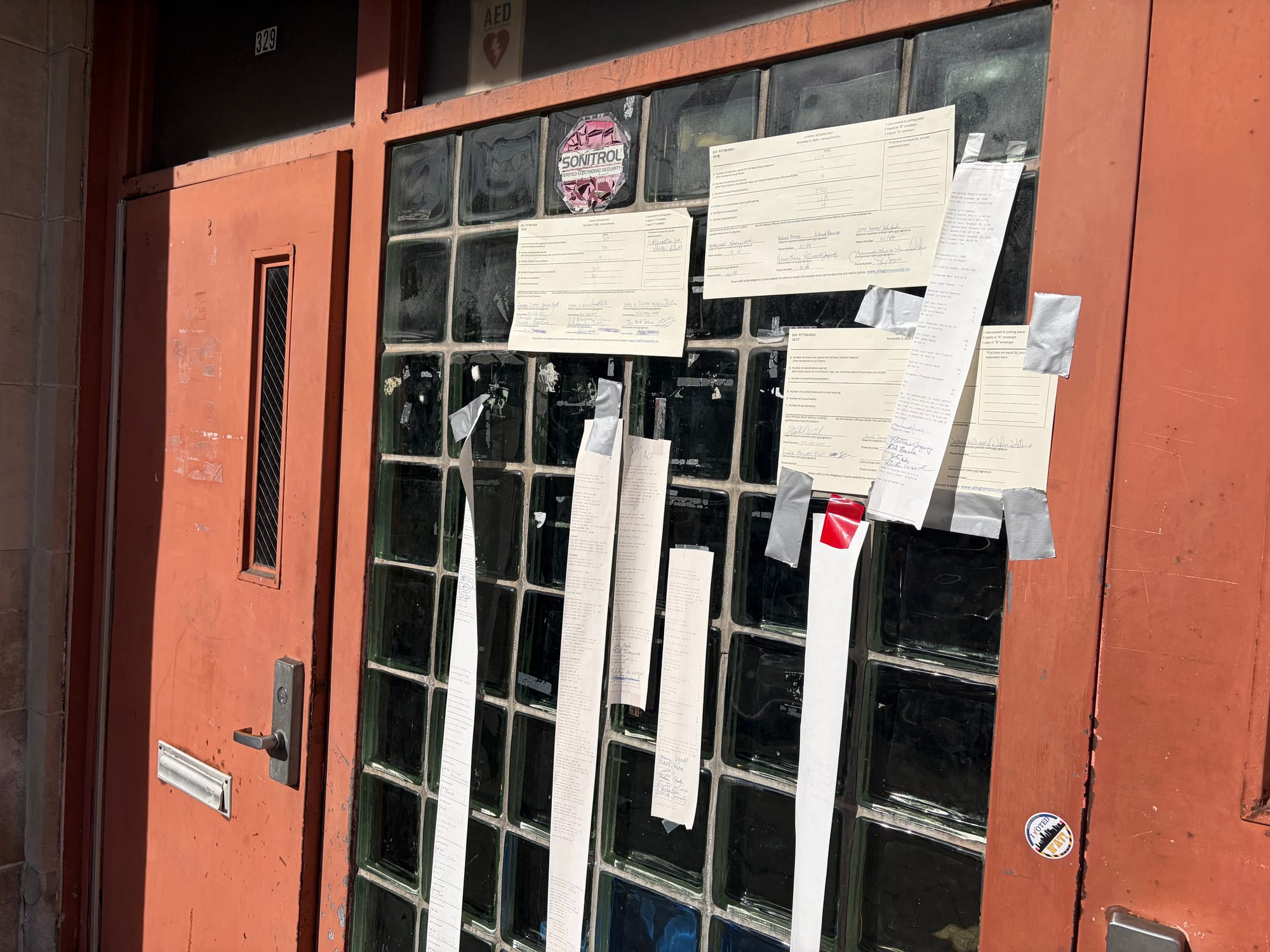
On Tuesday, there was a new face in District 5. He decided to take the day off and be a poll worker on a whim, he said. He was curious about the process and wanted to give it a try. He was the minority inspector this time around, which meant that the envelope labeled “B” would go home with him the way it had gone home with me in May. Inside, there are duplicates of the poll book listing the in-person voters, as well as a general return sheet (signed by all of us), and copies of the “zero tape,” the long paper a few inches wide that voting machines print before the polls open and after they close (also signed by all of us).
Minority inspectors keep those envelopes for a year after the election. In May, when I placed that envelope in the same drawer where I keep my mortgage and tax documents, I thought about all the similar envelopes in homes in Pittsburgh, Allegheny County and across the nation. It’s elections and civic engagement at work: a little piece of a larger puzzle, all created in the name of election protection, redundancies and accountability.
I believe if more people worked the polls, there would be less room for fear-mongering about election fraud. At a physical polling place, there’s so many checks and balances that are in play to ensure that voting goes the way it’s meant to: Workers find their names in the poll book and have them sign next to their names. They are given a paper ballot or use the ExpressVote machine. It displays the questions on a screen where voters can make their choices that are recorded on a paper the machine marks. The ballot is then fed into the machine and recorded. Those numbers are compared to the running list of voters who came that day, plus the number of unused ballots and spoiled ballots. Voters who aren’t in the books can cast a provisional ballot, which the county later verifies against registration rolls and mail-in and absentee ballots.
It’s a lot of checking and double-checking to ensure the math is right.
Accusations of voting fraud has been a common refrain by President Donald Trump, particularly around the 2020 election when he lost to Joe Biden. Voting fraud is “vanishingly rare,” according to the Brennan Center for Justice, one of the nation’s leading legal and policy institutions.
We saw the system work recently when right-wing TikTok influencers James O’Keefe and Cam Higby were charged last week with unlawful voting and identity theft after they attempted to fraudulently vote in Minnesota’s primary election on Aug. 11, according to the Minnesota Reformer.
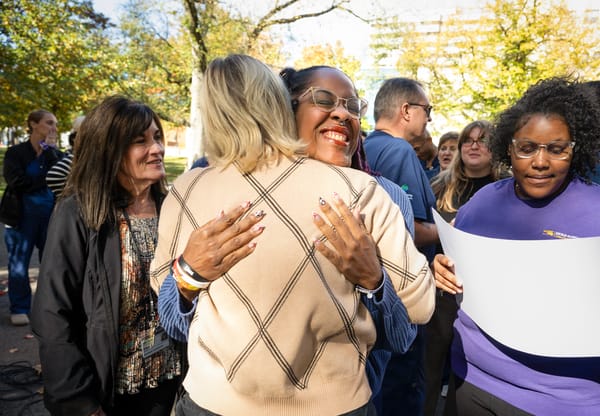
There’s also something to being in the same building for 15 hours with people you may have never met before. Everyone was a stranger to me in May, but we worked together to ensure everything went smoothly, navigating voter issues and signing paper after paper with all those important numbers written on them.
There’s also something to being in the same building for 15 hours with people you may have never met before. Everyone was a stranger to me in May, but we worked together to ensure everything went smoothly, navigating voter issues and signing paper after paper with all those important numbers written on them.
The constable for my district works at the gas station up the road; I’ve run into her several times since May. As sappy as it may seem, being recognized by someone else is meaningful to me. I recognized voters on Tuesday who had come to vote in May. A neighbor stopped by to say hello after voting, as did many others who knew other people at my table.
Pittsburgh councilperson Bob Charland, who represents nearby District 3, also stopped by with soft pretzels to hand out to poll workers. Before he arrived, I had expressed hope he would appear as he had for the primary with the snack in tow. Poll workers bring snacks and drinks to make it through the day, and we are given an hour break, but food is always appreciated, and the pretzels made Charland a popular man when he appeared. Pittsburgh Mayor Corey O’Connor also stopped by to shake hands and say hello, although he did not bring any treats.
Elections are stressful times; I didn’t want to get my hopes up for how things would shake out across the nation. While there hasn’t been as much attention on the elections in Pennsylvania as there have been in, say, Ohio, Michigan or Texas, I still saw many of the attack ads and political posturing occurring in those states. Toward the end of the night, the newest worker at District 5 started discussing exit polls in Texas and Florida and what they could mean for the results. I just said, “I don’t believe anything until the AP [Associated Press] calls the election.”
On Wednesday morning after waking up from a deep, exhausted sleep, I was able to see what had been called: The U.S. Senate and House of Representatives flipped to blue, Texas elected a Democrat U.S. senator and governor, Michigan elected the first Muslim U.S. senator and many states have their first Black and women governors, just to name a few of the changes. In Pennsylvania, Gov. Josh Shapiro won his second term, and the state Senate flipped to a Democratic majority, which means the governor, state House and state Senate will all be controlled by Democrats for the first time since 1993, according to the Philadelphia Inquirer.
Poll work is nonpartisan, and there is no interference on that level when you walk into a polling station. It’s paperwork and handing voters their ballots and helping others figure out where they’re meant to be. It’s a common sight at the Warrington Rec Center for a voter to come in and say, “I’m not sure where I’m supposed to be.” So they visit the tables for the three districts and poll workers check their poll books. If that person’s name isn’t found, we help look up the registration — as I did several times throughout the day, walking into the atrium or outside to get a signal on my phone. We can direct people to the correct polling place, usually nearby.
Poll workers' training includes a section on de-escalation and what to do if federal immigration officers enter a polling place, something they’re not allowed to do. There were no ICE officers this year, but it was something that I discussed with my judge of elections. It was mostly to go over what we should do if that were to happen: Remain calm, ask to see a warrant and call the county Elections Office.
While something of that nature could happen in the future, what actually happened on Tuesday on East Warrington Avenue was me giving the same instructions over and over again: “This is your ballot. It is a single side. Go over there to an empty voting space and when you’re done with your ballot, head over to the voting machine there,” with accompanying hand gestures. It was also poll workers clapping for first-time voters, saying hello to children accompanying their parents, petting a handful of dogs that came in with their owners, and making small, everyday connections with neighbors.
Community support got us through our strike, and I believe that mutual aid is what will get our communities through whatever the future holds. Becoming more familiar with my neighbors, whether they are poll workers or voters, is important and part of becoming part of the fabric of my neighborhood. I encourage anyone who can to sign up as a poll worker for a future election. It’s a valuable experience and an important peek behind the curtain of the election process.
This story originally published at 8 a.m. Nov. 5, 2026.