Little Italy Days: What’s in a name?
After more than two decades, the Bloomfield festival grapples with what it means to be Italian enough

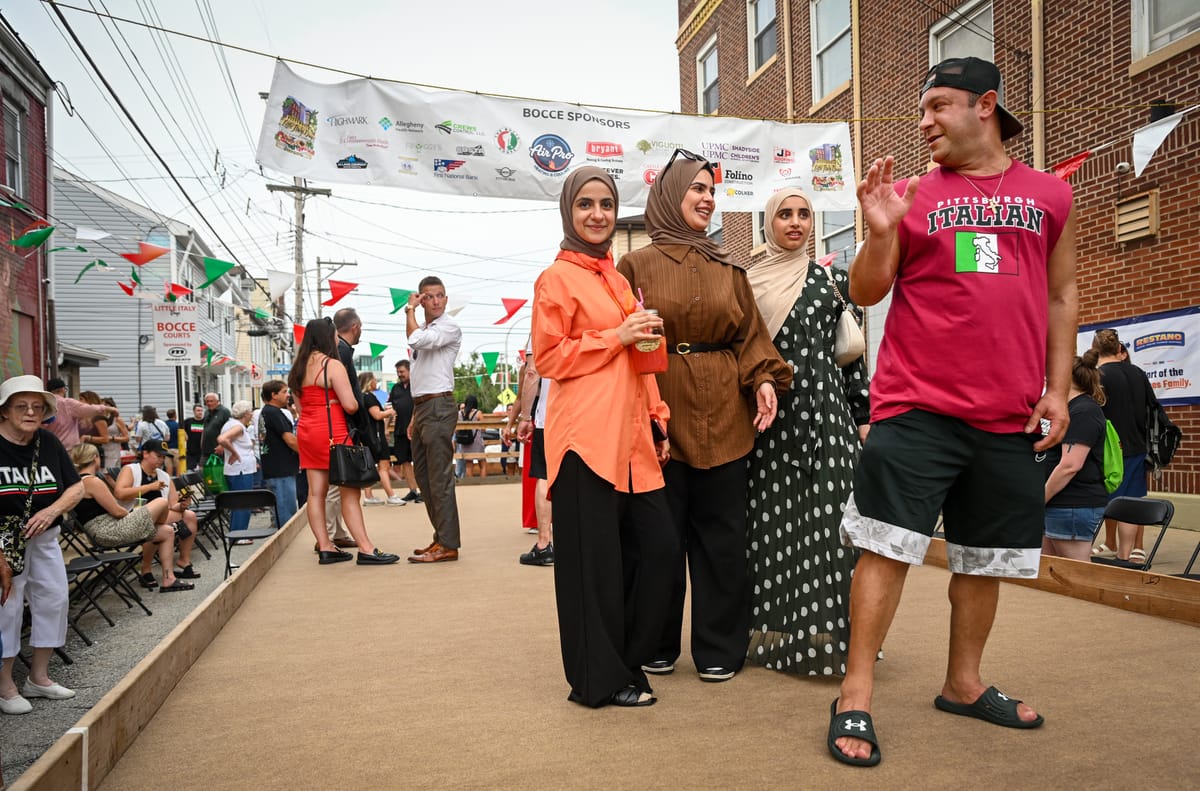
Christopher Ranallo is as Bloomfield Italian as they come: He attended Immaculate Conception for grade school and was a St. Maria Goretti altar boy until high school. He grew up on Cedarville Street and attended the first Little Italy Days festival. In fact, he’s even worked the event, slinging drinks at the Pleasure Bar and keeping an eye on vendor tents at night.
These days, he still puts Little Italy Days on his calendar months out of the festival — but not to attend it.
The 35-year-old, like some Bloomfield residents who live close to Liberty Avenue, skips town in August to get as far away from Little Italy Days as possible.
“The neighborhood has definitely evolved, and it’s kind of a shame that it still goes by Little Italy Days,” he says. “It almost feels like a cosplay event at this point.”
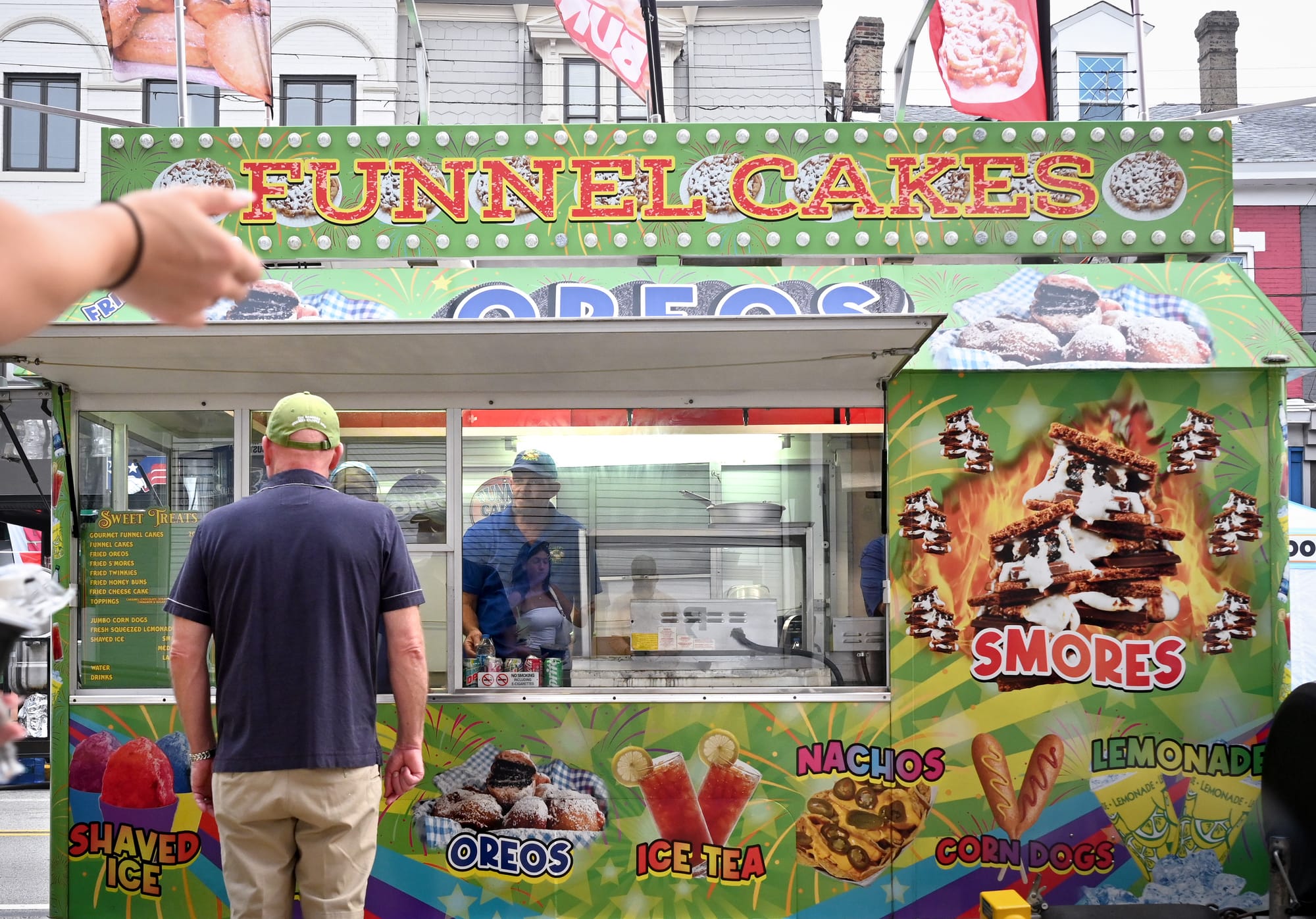
Little Italy Days began in 2002 as a smaller, community-organized street fair and church fundraiser, complete with homemade cannolis and pizzelles. According to a 2019 story by Pittsburgh City Paper, Sal Richetti — owner of Big Day Entertainment, a private events company — was asked to take over Little Italy Days in 2012 to make it “financially viable.” A vocal contingent argued then — and now — this focus on profitability has left only a little Italy in Little Italy Days, as evidenced by tents promoting gutter protectors, vinyl siding and non-Italian carnival-style food overshadowing local businesses and nonna’s sweets.
Richetti says the event draws around 100,000 people each year, with businesses benefiting significantly. He pushes back on those who don’t own businesses in Bloomfield but say the festival negatively impacts the neighborhood or that it isn’t authentically Italian.
“Most businesses love it and need it,” he says. “I’m very down to make [Little Italy Days] positive, fun, safe, [and] family-friendly.”
The Pittsburgh Progress spoke to more than 30 sources across Liberty Avenue businesses, Bloomfield residents and Bloomfield registered community organizations regarding Little Italy Days — taking place through August 16 — and how it celebrates the neighborhood’s Italian heritage.
There is a desire for some kind of festival along Liberty Avenue; however, there is no consensus on how Little Italy Days can best serve Bloomfield — or how best to move forward.
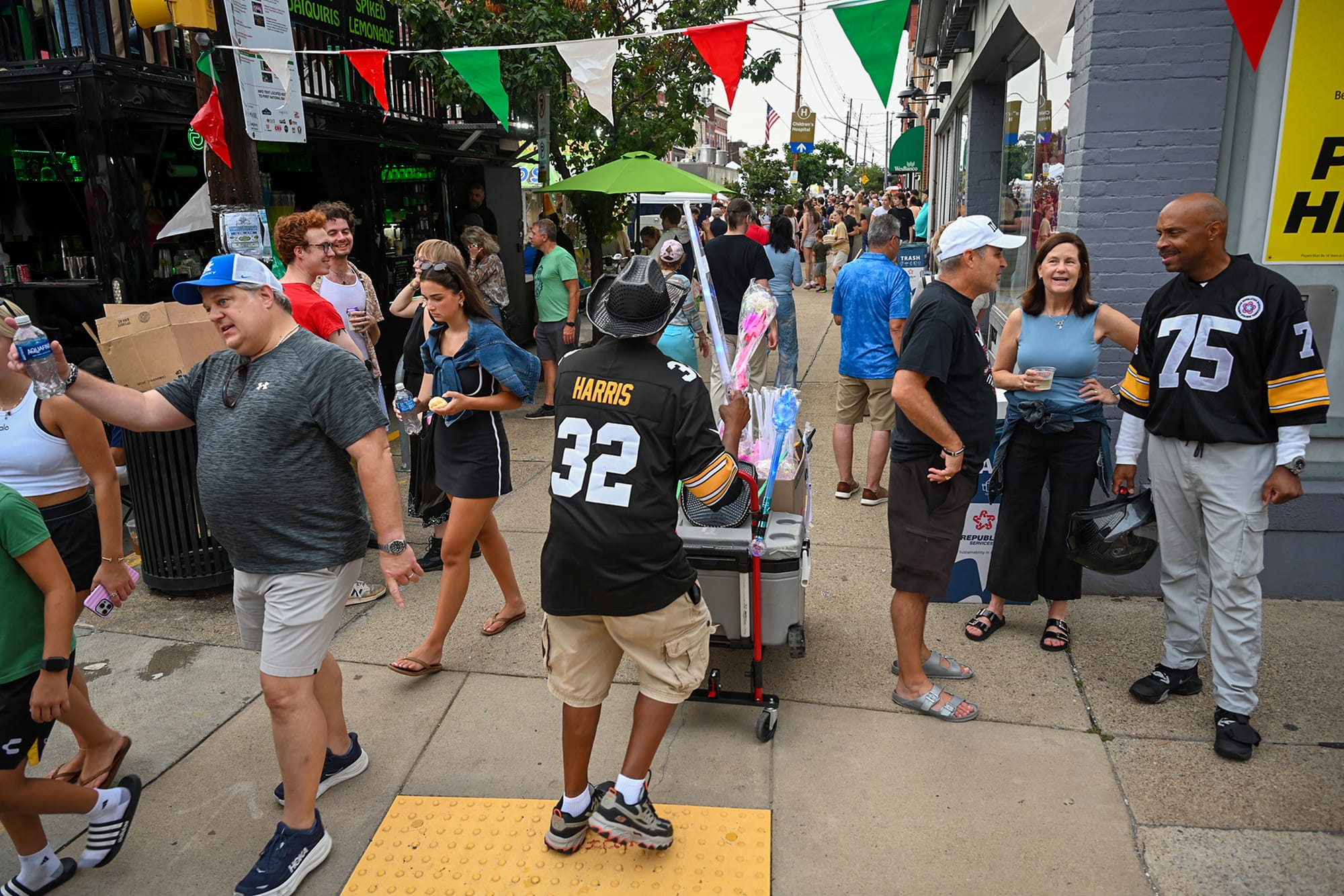
Bloomfield businesses feel the impact
Max Cianci is a Bloomfield resident, filmmaker and creator of “Little Italy Daze,” a 2025 short that follows Gino Boiardi (played by Cianci), a native Italian living in Pittsburgh experiencing Little Italy Days for the first time. He feels Little Italy Days is “commercial” compared to other Bloomfield events like the Halloween parade.
“It doesn’t feel like there is a warm heart to this festival,” he says. “There are certain aspects of it where they do maintain some Italian traditions and heritages, but the vast majority of it doesn’t feel that way.”
Others say Little Italy Days should remain unchanged and that there is enough of an Italian presence at the festival as is. And what small business wouldn’t want to take advantage of the massive foot traffic the festival brings?
According to employees or owners of the 12 businesses interviewed for this story, there’s an even split between those that keep their doors open and those that shut down during Little Italy Days.
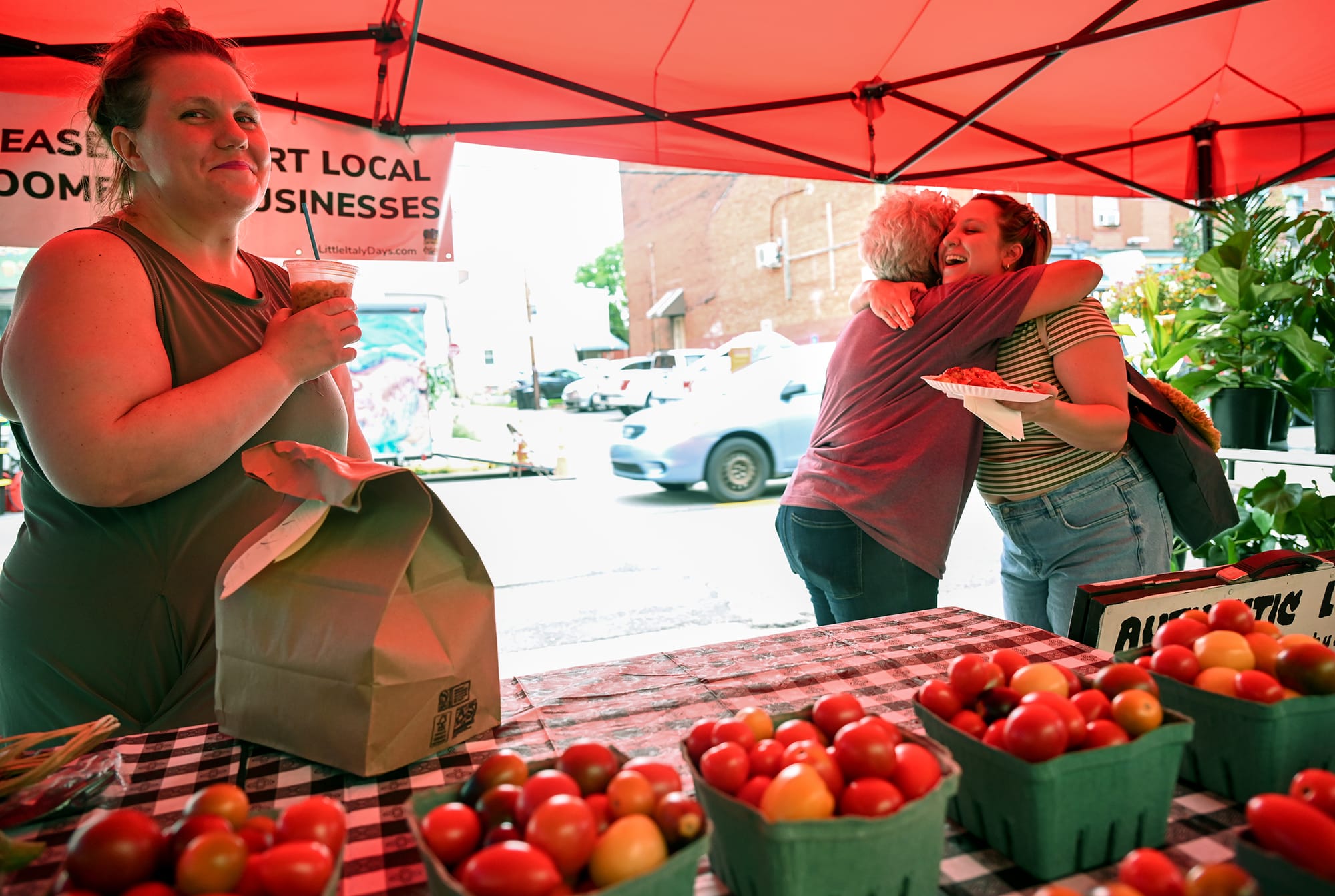
Emily Otte, a Bloomfield resident and business owner, closes her plant store, Emilichka, at 4614 Liberty Ave. in the old Palanzo’s Beer Distributor building for the four-day festival.
Based on her conversations with other business owners on the street, closing for Little Italy Days normally comes down to three reasons: It’s a convenient time to take a vacation or time off; the business doesn’t make enough money to justify staying open because festival attendees often stay in the street; and, in her words, “It isn’t worth the hassle.”
Emmy Zero, a Bloomfield resident and one of two employees at Wicked Skatewear at 4618 Liberty Ave., notes that the shop either closes completely or becomes appointment-only during Little Italy Days.
“People eating $18 sausage sandwiches aren’t looking for roller skates,” she says. “The only foot traffic we have is from people wandering in to get out of the sun.”
Jay Imbrie, Bloomfield resident and co-owner of Mimic’s Market, a friendly local game store at 4707 Liberty Ave., can’t afford to close because his revenue during Little Italy Days tends to equal that of a normal day. It’s not business as usual, though.
“We use it as an opportunity to indulge in patronizing the local businesses that are benefiting a lot from the stability that the neighborhood can offer during Little Italy Days,” he says.
Restaurants and bars tend to benefit from Little Italy Days the most, although other Liberty Avenue businesses find festival participation worth it. Kerim Yilmaz, co-owner and founder of Geppetto Cafe, notes the festival helps advertise the cafe, which expanded into Bloomfield from Lawrenceville in 2023. Ron Leone of Leone Florals often sells out of plants during the festival.
Jamie Campau of the Pleasure Bar says his 85-year-old business — which he’s owned for 21 years — sees four to five times more gross sales compared to a typical busy day.
Preparing for Little Italy Days, however, takes months of work. Campau begins preparing for the festival in May.
Campau holds resident criticism and business benefits as two truths at the same time. He knows of at least three residents on Cedarville Street who leave home during Little Italy Days.
“What was a great neighborhood celebration still is, but the explosion of it has had some casualties of livability,” he says.
Bloomfield businesses that want to expand their presence for Little Italy Days can set up for free on the sidewalk in front of their business during the festival — and many do, including the Big Idea Bookstore, Rocky’s Cafe and Saint Ravioli.
Costs, however, can be prohibitive for those who want to expand into the street. Booth pricing starts at around $200 a day for a 10-by-10-foot space for food and drink concessionaires and between $138 and $162 for non-food and drink or craft vendors.
Prices also change based on a booth’s location and size: a 10-by-10-foot “Ultra Super Premium” space between Edmond and Pearl streets will run a concessionary vendor $1,595 for the duration of the festival; that price rises to $3,250 for a 10-by-30-foot tent in the same area.
Although Liberty Avenue businesses can get a discount on booth space, it’s unclear how these discounts are determined. According to a 2019 Pittsburgh City Paper article, Bloomfield businesses work directly with Richetti to negotiate rates.
Businesses also don’t know what kind of vendor will set up in the street space in front of their shops if they don’t book the space. Gina Merante, owner of Linea Verde Market, purchases the space in front of her store and neighboring Sausalido for that reason.
Although Linea Verde is closed during Little Italy Days, Merante is outside supporting Sausalido and Bitter Ends Luncheonette, who are tabling and selling their goods from Merante’s street spot. She instead focuses her business on the other 361 days of the year and believes there could be more “Italy” in Little Italy Days.
“Of course I always think I’m right,” she says. “That’s just part of being Italian.”
Little Italy Days faces a reckoning
For others with deep ties to Bloomfield’s Italian heritage, like Nina Sacco, co-chair of the Bloomfield Alliance, and Rita Porterfield, its secretary, Little Italy Days represents a homecoming. It’s one of the few remaining Italian heritage events in Bloomfield following the closing and demolition of Immaculate Conception Church in 2025 and the closure of Italian businesses across Liberty Avenue, including Donatelli’s Italian Food Center in 2022, Lombardozzi’s following the COVID-19 pandemic, and Del's Bar and Ristorante DelPizzo in 2015.
Both note that the neighborhood’s Italian population is declining: 35% of Bloomfield residents self-reported Italian ancestry in 1980, per Census data; that number is now 22%.
Porterfield says the “not Italian-enough” critique of Little Italy Days is ironic.
“The most quintessential thing of being Italian American is the debate over who’s the real Italian [and] who is the right Italian,” she says.
However, there is some hesitation — or obstinacy, depending on who you ask — around changing Little Italy Days. At a July 22 Bloomfield Development Corp. board meeting, attendees encompassing Bloomfield businesses and registered community organizations like the Bloomfield Alliance were asked to respond to the question, “What do you imagine for Little Italy Days?” by providing anonymous written comments on a large easel pad.
Suggestions with the aim of preserving the festival’s Italian roots included limiting festival participation to Pittsburgh-based businesses and getting rid of “carnival food tents.” Another went the other way: renaming the event “Bloomfield Days” so “folks stop complaining that it isn’t Italian enough.”
The largest response on the pad — literally — was “Leave Little Italy Days alone,” with eight checkmarks of support next to it.
Bloomfield Development Corp. leaders did not respond to a request for comment regarding the suggestions.
Richetti was invited to the board meeting, according to the minutes, so businesses could “gain insight from (him) on how to best take full advantage of the business and foot traffic the event generates for the community.”
He could not attend due to “last-minute scheduling conflicts,” according to the minutes.
Some interviewees gave Richetti credit for putting on an event that requires levels of time, staffing and planning not feasible for small business owners to assume. And, for as much ire as the event draws, there have been positive changes to Little Italy Days over the years, particularly around consistent trash collection.
“He does understand that the principles of [Little Italy Days] mean a lot to local businesses,” Campau says. “He really stands firm on some of his own things, and that’s met with some resistance. As far as I’m concerned, it’d be very tough to have an idea, or duplicate that many happy faces in a period of time.”
It’s highly unlikely Little Italy Days will return to its more authentic beginnings. However, there is charm and warmth to be found in the current version if you look in the right places.
A reporter soaks up some culture
While walking around on the first night of the festival, I couldn’t help but crack a smile when “Dominick the Donkey” — a Lou Monte song about a donkey who helps Santa Claus deliver presents to children in Italy after the reindeer fail to climb mountainous terrain despite their ability to fly — played from a speaker as I crossed the street.
I marveled at the onlookers at the celebrity Irish-versus-Italians bocce game, nary a phone in sight or in hand. (The Irish trounced the Italians, by the way). And even I am not above commercial temptation: I paid $8 for a medium cup of Dippin’ Dots without regret or hesitation.
While interviewing Whitehall residents Theresa and Frank Cicci, I experienced a canon event for those welcomed to an Italian home for dinner.
After a few questions, Theresa unwrapped a plastic fork and handed it to me, and the Ciccis offered me bites of their pasta and meatballs from the Santello’s stand with an insistence that defied journalism ethics. Our interview turned into a regular conversation.
“That’s how Italians are,” Frank says, before slicing me a piece of formaggio fritto, a fried cheese dish from the Abruzzo region. A stranger’s desire to break bread with another (or, in this case, something that resembled a giant mozzarella stick) superseded the need for Italian authenticity.
The event isn’t above criticism, but there’s one thing I’ve learned after living in Pittsburgh for over a decade: Yinzers are as passionate about this city’s traditions and history as they are critical of it because they care.
According to Porterfield, Maria Merante — older sister to Gina and one of the original organizers of Little Italy Days — had a name for a similar phenomenon in the community: “Italian martyr syndrome.”
“Bitching is a fine Italian art,” Porterfield says. “We love to bitch about [something], but we would be doing it anyway because we love it.”