The Mon Valley Unemployed Committee wants to fix the state’s ‘broken’ benefits system
Fundraiser will build on its successes while continuing to fight for laid-off workers

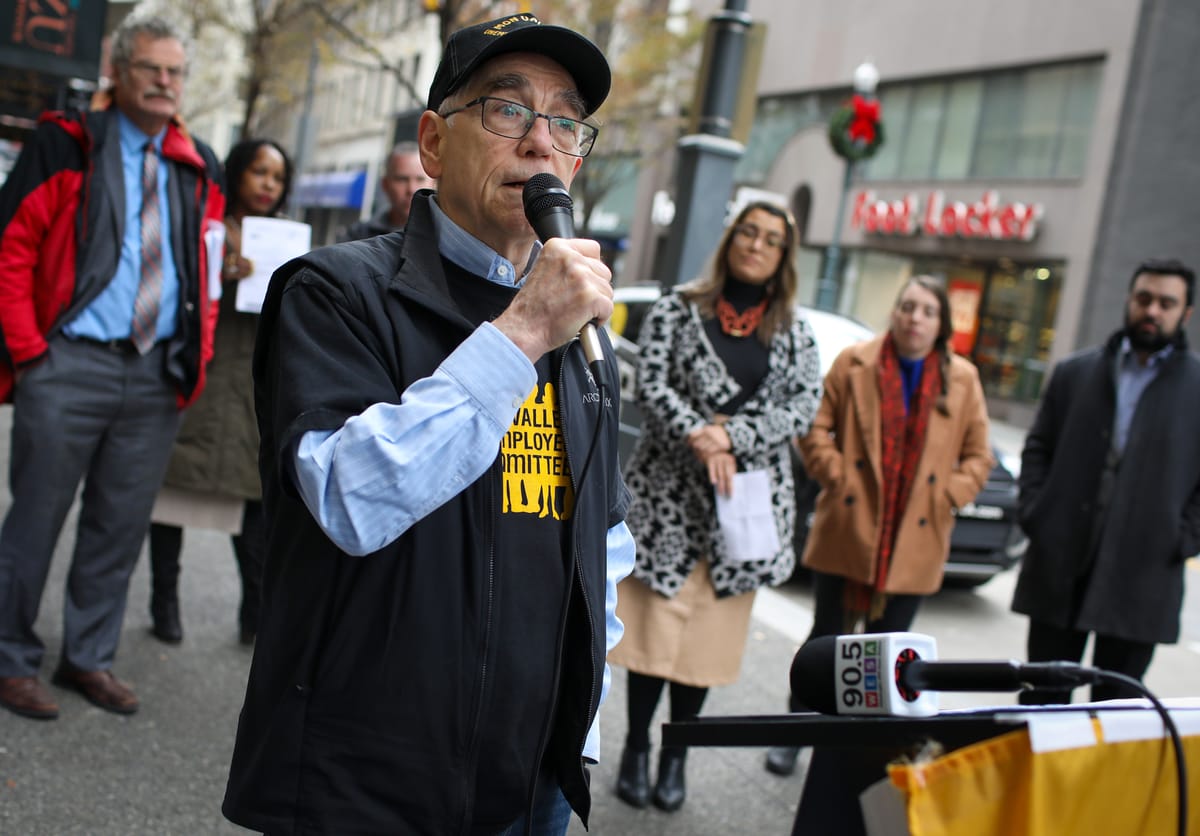
When the region’s steel industry collapsed in the 1980s, leaving tens of thousands of Western Pennsylvanians without jobs, community activists and laid-off steelworkers came together to form the Mon Valley Unemployed Committee.
Their outreach efforts included food distribution at a church in McKeesport; a hotline to help desperate jobless workers figure out how to pay utility and home mortgage bills; and bus trips to Washington, D.C., to urge the federal government to extend unemployment payments, fund retraining programs and end liens against people who received welfare benefits.
The committee helped launch a health insurance fund for workers’ kids that became a model for the state-federal partnership known as the Children’s Health Insurance Program or CHIP.
Decades later, the committee is still helping workers with unemployment claims. Only now its reach extends far beyond the Mon Valley and the steel industry.
“We’re about trying to fix the broken unemployment [benefits] system,” said Barney Oursler, the committee’s 77-year-old director who co-founded the nonprofit in 1981.
But continuing its efforts has been challenging since grants the committee received during the COVID-19 pandemic have run out, Oursler said.
To boost cash flow and help it sustain full-time staff, the committee will hold a fundraiser from 5:30-7:30 p.m. Sept. 17 at Spirit, a restaurant and event space in Lawrenceville.
Pittsburgh political leaders, state legislators and Allegheny County Executive Sara Innamorato are scheduled to attend.
Tickets start at $100 for individuals.
Since its early years in assisting displaced manufacturing workers, the organization has focused largely on helping laid-off workers across a variety of sectors navigate what can be a challenging maze to secure benefits and work through claims appeals.
Automation hasn’t necessarily made the process easier, Oursler noted.
“When everything went online, or over the phone, there weren’t enough people working to administer claims,” he said.
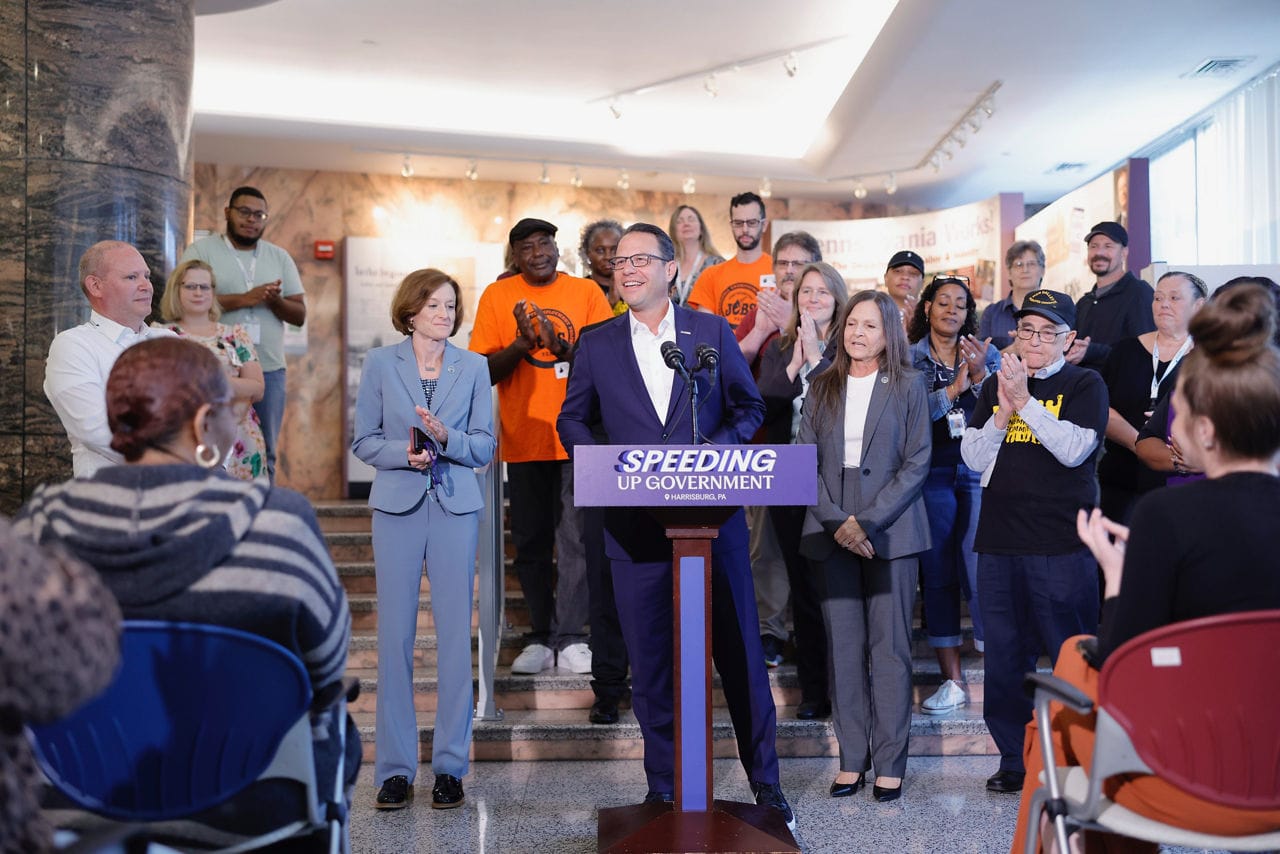
The committee has worked closely with the state Department of Labor and Industry under Gov. Josh Shapiro to enact changes to improve the system.
Its efforts helped lead to hiring 400 new staff employees to handle state unemployment claims, install in-person staff in PA CareerLink centers across the state, and maintain a 24/7 live chat line for those with questions about unemployment compensation.
Last year, Oursler and the committee were recognized at a press briefing where Shapiro announced that average call wait times at the state’s Unemployment Compensation Service Centers had dropped to under 10 minutes from one-hour plus in 2023.
The committee continues to collaborate with the state on reforms, Oursler said.
“We still have disagreements, but we have built a sense of trust [with state officials] that we’re not grandstanding,” he said.
Oursler and two other committee staff employees are currently working part time. His goal is to increase the committee’s annual budget from just over $100,000 to $300,000 to fund full-time salaries and operations.
A federal grant and support from local philanthropies – including the Pittsburgh Foundation and the Heinz Endowments – helped the committee sustain operations during the pandemic.
But those funds have run their course.
“Money from foundations flows when unemployment is a really hot item like during the pandemic or steel collapse,” said Oursler.
The committee currently relies largely on donations that individuals make through United Way of Southwestern Pennsylvania and contributions from local unions, including the United Steelworkers and the Amalgamated Transit Union (ATU) Local 85 that represents Pittsburgh Regional Transit workers.
Oursler hopes the fundraiser will shore up a donation base “for the longer term.”“We have lots of plans and possibilities to help a lot of people on a grander scale,” he said.
Among those initiatives is training for front-line staff at Carnegie Library of Pittsburgh and the Diocese of Pittsburgh who assist people struggling with job loss and delayed jobless claims.
The committee is also looking ahead to how artificial intelligence systems could downsize the workforce.
“We’re trying to anticipate some of the job changes,” said Oursler.
Many whose jobs may be impacted by artificial intelligence work in customer service and financial services, sectors where employees are not typically represented by labor unions, Oursler noted.
“We have to figure out how to reach out to those workers … who may face job loss in the next five to 10 years,” he said.
Before becoming an activist for the unemployed, Oursler spent eight years at U.S. Steel’s Irvin Works in West Mifflin, where he bundled red-hot rolls of steel and served as a union representative for the USW, negotiating with the steel giant over issues like 12-hour workdays.
He left the committee for a decade to serve as executive director of Pittsburgh United, a coalition of community organizations that works to improve housing, economic and environmental equity.
After the committee’s staff attorney died suddenly in 2018, Oursler returned.
He’s been energized by his work for decades, he said, because, “People who were unemployed were a lot more willing to fix the stuff that was broken.”
Tickets are still available for the fundraiser. For more information or to donate go to: https://monvalleyunemployed.org/fundraiser/