National conference highlights how Western Pa. is redefining urban renewal, house by house
From Wilkinsburg’s land bank strategy to East Hills’ homeownership revival, local leaders and residents show national advocates how block-level power restores equity and dignity to neighborhoods plagued by vacant and rundown structures

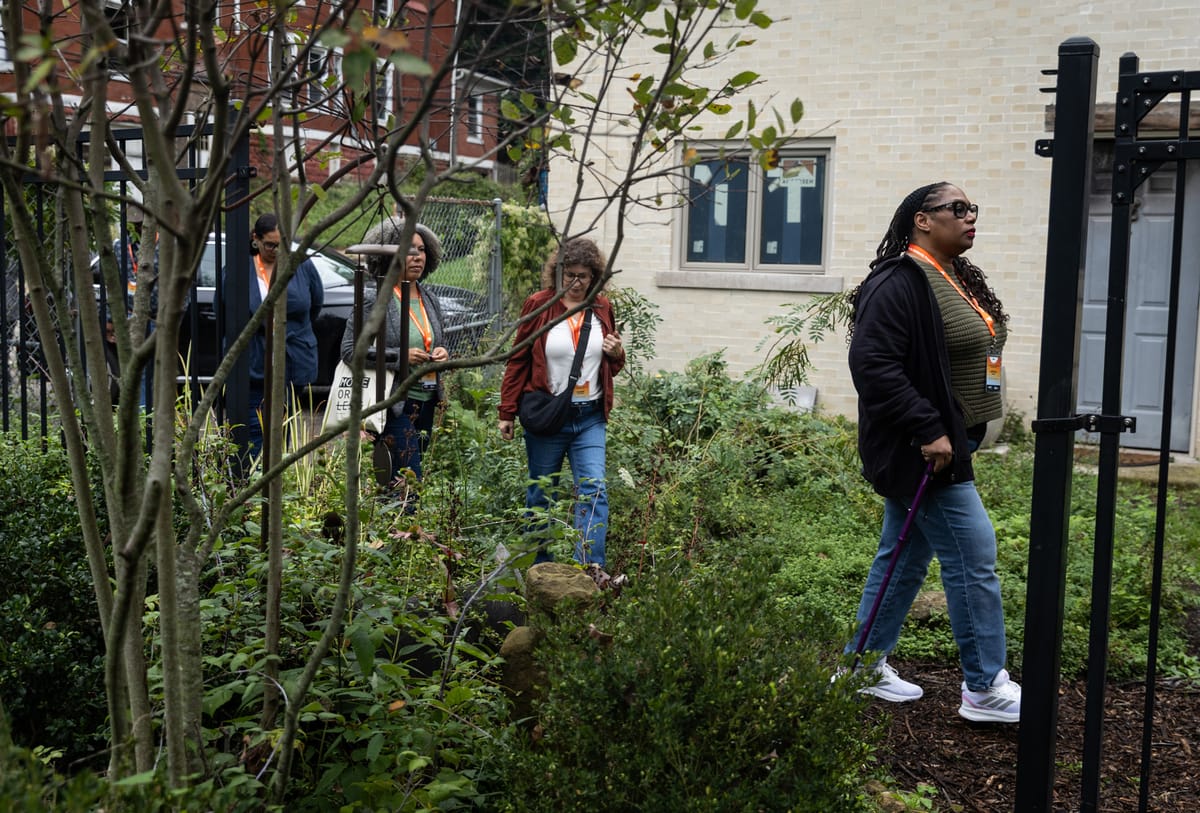
For decades, Western Pennsylvania’s approach to urban renewal was defined by top-down authority and the heavy swing of the wrecking ball. During the famous "Pittsburgh Renaissances" of the mid- to late 20th century, corporate-led agendas frequently bypassed working-class residents, seizing land through eminent domain and displacing thousands of Black families in neighborhoods like the Lower Hill District.
Last week, as national leaders gathered for the 2026 Reclaiming Vacant Properties Conference, a starkly different paradigm took center stage. From the borough of Wilkinsburg to Pittsburgh’s East Hills neighborhood, local organizers, tradespeople and policy advocates demonstrated for attendees how bringing legacy residents and local workers directly to the decision-making table builds lasting community equity.
The three-day conference began Sept. 23 at the David L. Lawrence Convention Center in Pittsburgh, uniting over 800 national leaders, policymakers, developers, and grassroots advocates. Hosted by the nonprofit Center for Community Progress, the gathering returned to the city where it first launched nearly 20 years ago. Preconference activities featured a mobile tour of Wilkinsburg and a service project in Pittsburgh’s East Hills neighborhood.
Wilkinsburg: A community-driven response to vacancy
The urgency behind these efforts is underscored by stark data. In Wilkinsburg, the residential vacancy rate sits at 22%, with roughly 1,900 of its 8,000 residential parcels significantly tax delinquent. Decades of property abandonment shifted Wilkinsburg from a majority-homeowner borough to a 70% renter community, leaving residents vulnerable to speculative investment.
When the Wilkinsburg Community Development Corp. formed in 2007, its initial mission focused primarily on business district revitalization. However, deep community outreach prompted a crucial pivot toward housing stabilization.
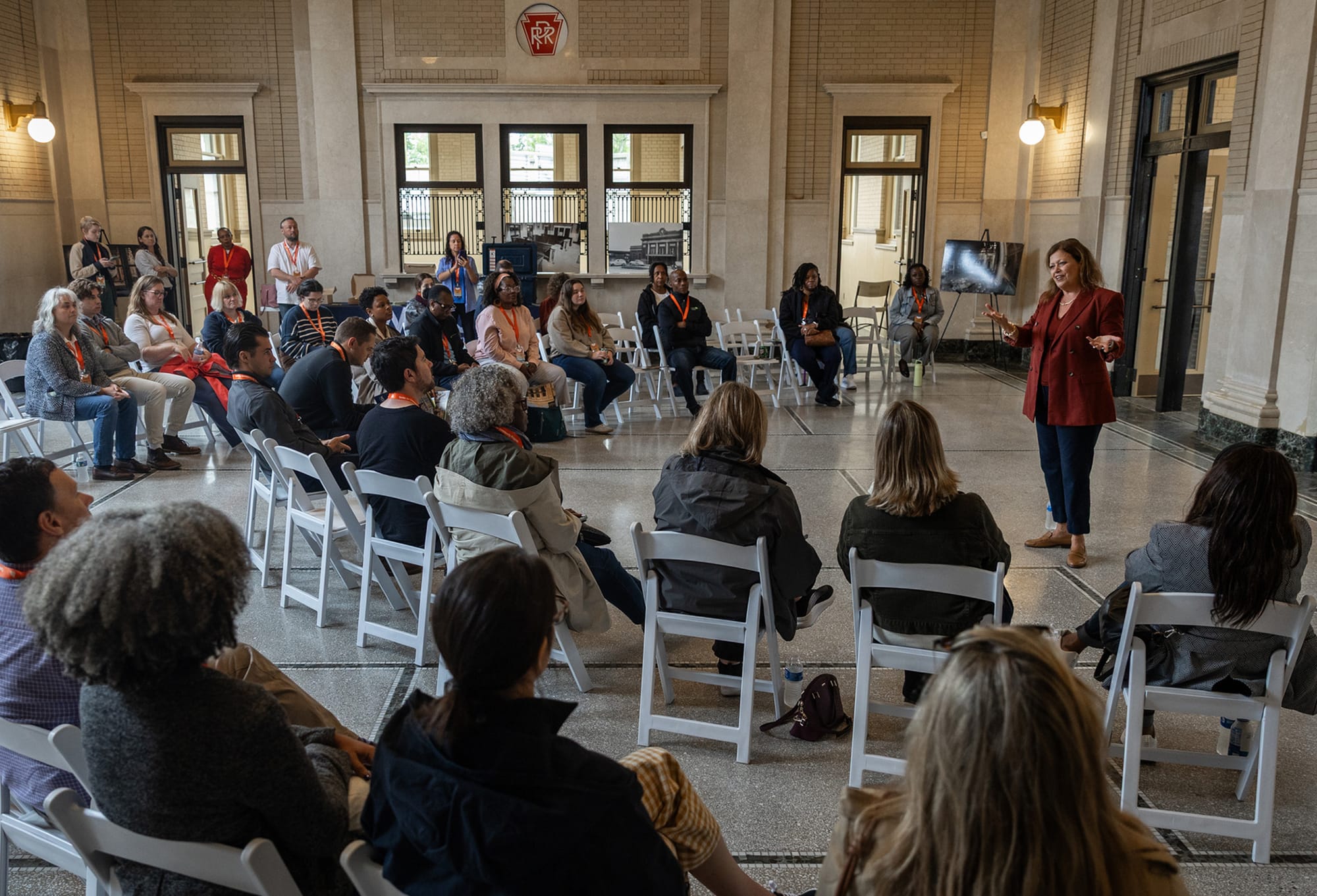
"Nobody’s going to come in and save you," said Tracey Evans, executive director of the WCDC. "What we are trying to do is say, 'We will help you as a neighborhood make decisions and plans yourselves. You have to take ownership on this. You’re not going to see people just come in and fix this for you.’ "
Under its Strong Neighborhoods Initiative, the WCDC addresses housing loss from two angles: keeping long-time residents in their homes and empowering local block groups to take charge of nearby vacant land. Through programs like the Homeowner Assistance and Repair Program, funded via the Pennsylvania Housing Finance Agency, the WCDC helps seniors and low-income homeowners afford critical roof repairs and tree removals while providing free legal aid to resolve tangled titles and to draft proper wills.
On Sept. 22, the mobile tour stopped at the recently renovated Turner Elementary School, where representatives of the Wilkinsburg Land Bank, an entity created to acquire and repurpose vacant, abandoned, tax-delinquent and blighted properties, explained how it acquired titles to roughly 30 abandoned properties while the borough repaved streets and rebuilt sidewalks to stabilize the neighborhood.
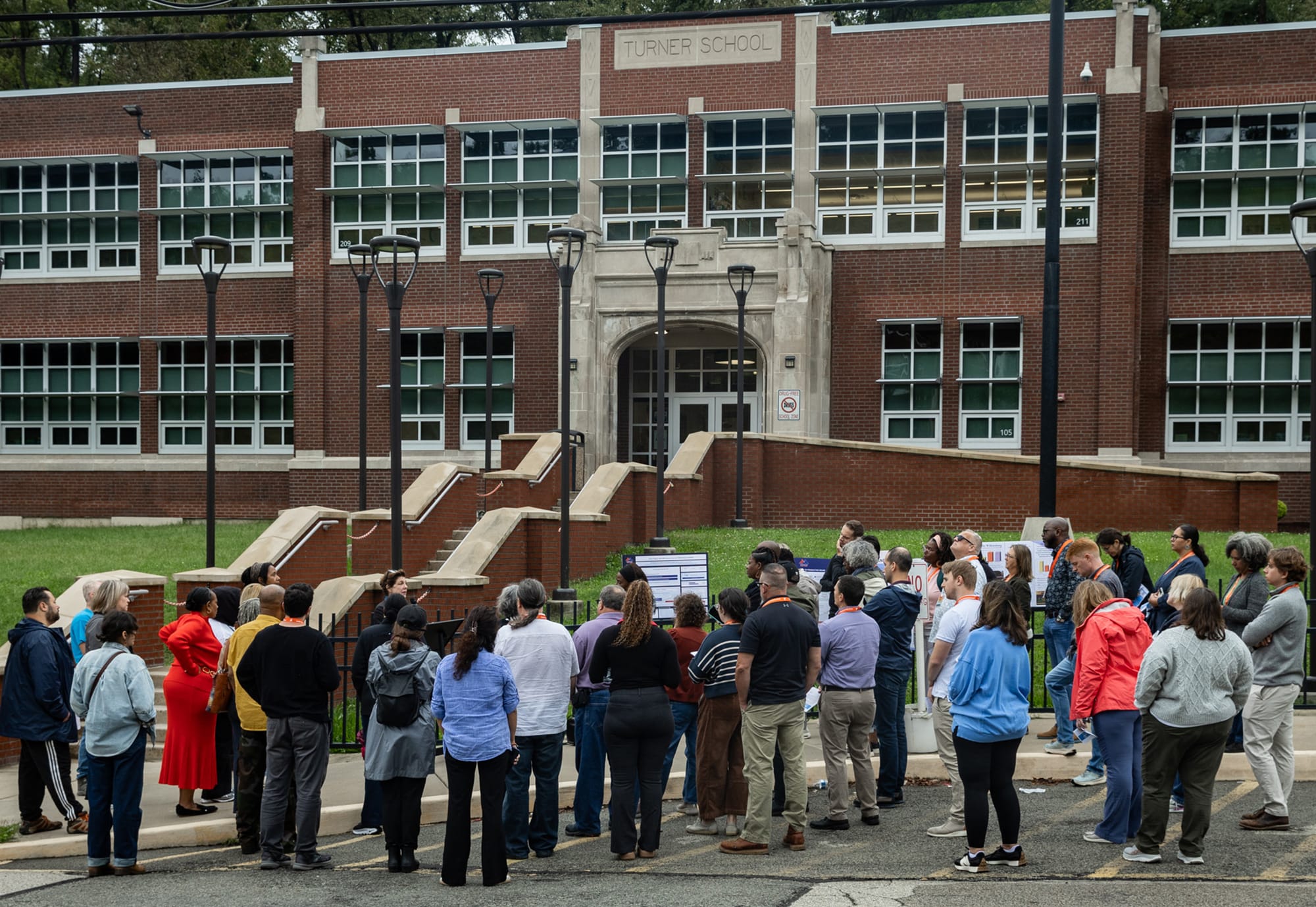
"The real story we wanted to tell here is that we wouldn't be able to redevelop if we all were not pulling together," said Renee Dolney, the land bank's executive director, highlighting the alignment among the school district, borough council and her organization.
For out-of-state attendees, Wilkinsburg’s model proved that Rust Belt housing challenges transcend municipal borders.
"The tour was inspiring because it showed that the situations and problems we face are faced all throughout the nation," said Leroy Fisher, co-founder and director of Hunting Park United, a community-driven nonprofit organization dedicated to revitalizing the green spaces and neighborhoods of Hunting Park and East Tioga in North Philadelphia. "I got to see that even here in Wilkinsburg, the organizations, city government and residents are coming together to attack some of the same issues we have in Philadelphia. There are lessons to learn from people who you may not think have the same problems, but we all do."
Intentionally reclaiming large homes
Beyond traditional land banks and municipal development, grassroots organizations are pioneering creative models to reclaim Wilkinsburg’s largest homes in the Singer Place neighborhood. Brian Sieffert, of Artemis Construction & Design, highlighted how an emerging residential arrangement where people consciously choose to live together based on shared values, known as intentional co-living, can prevent massive homes from being carved into predatory multi-unit apartments. Standing in a formerly abandoned 21-bed personal care home restored without government money, using repurposed materials, estate sales and resident labor, Sieffert said, “We made it look like a home again, but it is still a shared space.”
The timing is particularly apt as Pennsylvania lawmakers consider the "Golden Girls" bill, which would ease local zoning restrictions by allowing more than three non-related individuals to reside in a single-family home.
East Hills: Historic roots and a community rising
While the first day of the conference showcased municipal policy in Wilkinsburg, the second shifted into East Hills. There conference attendees joined a hands-on service project along Park Hill Drive, supporting a multiyear revitalization campaign led by the East Hills Consensus Group and Rising Tide Partners, a Pittsburgh-based organization that works to prevent resident displacement and preserve affordable housing.
For Diane I. Daniels, founder and executive director of a neighborhood coalition called the East Hills Consensus Group, the service project represents decades of advocacy to restore homeownership to a development established in the late 1960s.
"Park Hill was built for affordable homeownership back in that day," Daniels explained. "It looked really good — It was all homeowners. But over the years, people left or rented [out their properties]. A couple of years ago, we were sitting at one-third vacant, one-third homeowners and one-third renters."
To halt neighborhood decline, the coalition acquired roughly 88 vacant units across the original Park Hill homeowners association framework. Today, Daniels’ group partners with local financial institutions, the Urban Redevelopment Authority and homebuyer preparation programs like Catapult Greater Pittsburgh to help local renters become homeowners.
"A lot of residents don't want to leave East Hills," Daniels said. "You don't have to leave the community because you can come right here and be a homeowner. We are a rising, positive community."
Building the block: A trainee's path to homeownership
A cornerstone of the East Hills strategy is its workforce partnership with the Trade Institute of Pittsburgh, a Homewood-based nonprofit and vocational training center that trains formerly incarcerated individuals in landscaping, masonry and home renovation — addressing regional construction labor shortages while reducing recidivism, according to staff member Nate Keisel.
For Christopher Mayner, 46, a graduate of the institute's 11-week masonry program, working on the Park Hill Drive restoration through the trade institute isn't just a job. It’s personal. Working alongside community advocates like Daniels to clear vacant structures, Mayner found himself inspired to pursue homeownership on these very blocks.
"I live in an apartment, but I just want to have my own," Mayner said during a break at the project site. "I pay my bills like I'm supposed to. ... Either way you look at it, you're still going to have to pay something into it, so you might as well jump into the fire."
Mayner credits the program's rigorous training with instilling the technical skills needed to restore historic properties, but the most rewarding part for him is utilizing his new skills to spur his own neighborhood's physical turnaround.
"I'm feeling good because we get to enhance the community where I live," Mayner reflected. "I've seen all these houses drop off where you couldn't see nothing, and we're able to get it back up where somebody could actually live. If I can purchase one, one day, that's my goal."
Statewide networks and national lessons
The conference also highlighted how cross-city collaboration is strengthening community development networks across Pennsylvania. Fisher attended it through funding from the William Penn Foundation, which brought grassroots leaders from Philadelphia to share strategies on eliminating blight and driving neighborhood investment.
"The William Penn Foundation found it necessary to bring us together as a cohort so that we could network and move the ball forward," Fisher said, emphasizing takeaways from sessions like Jumpstart, a program focused on training local minority developers. "It’s about knowing that I can partner with individuals throughout my city who are doing great work so we can champion each other's missions."
For visiting municipal officials from further afield, like Angel Tumbling, housing grants and program coordinator for the city of Brunswick, Georgia, seeing Western Pennsylvania’s resident-first redevelopment offered a clear directive.
"Sometimes we make the mistake of moving forward with projects without even asking what the need is," Tumbling reflected. "Having that buy-in before going to stakeholders makes sure you're assessing the problem so you can solve it strategically."
From policy to people: moving beyond the numbers
For policy leaders like Zara Macias, who supports the Louisville Land Bank and the Mayor's Office of Housing and Community Development in Kentucky, participating in the hands-on site cleanup in East Hills served as a reminder that housing policy must remain anchored in human empathy.
"Oftentimes, policy solutions are focused on numbers — how many units we can build — and not so much the sociopolitical factors," Macias said, citing historical redlining in Louisville’s West End. "I wanted to gather knowledge outside of looking at housing units as abstract concepts disconnected from the human aspect. At the end of the day, cleaning, gardening, growing — it’s all community."
As Thursday’s sessions came to a close, the message that delegates took with them was clear: Sustainable urban revitalization doesn't start with a boardroom blueprint or a wrecking ball. It starts on the front porch, driven by residents, returning citizens and local coalitions working together to restore ownership, equity and dignity to a community, house by house.