Immigrants played major role in Pressed Steel Car 1909 strike
McKees Rocks battle deserves its rightful place in labor and social history

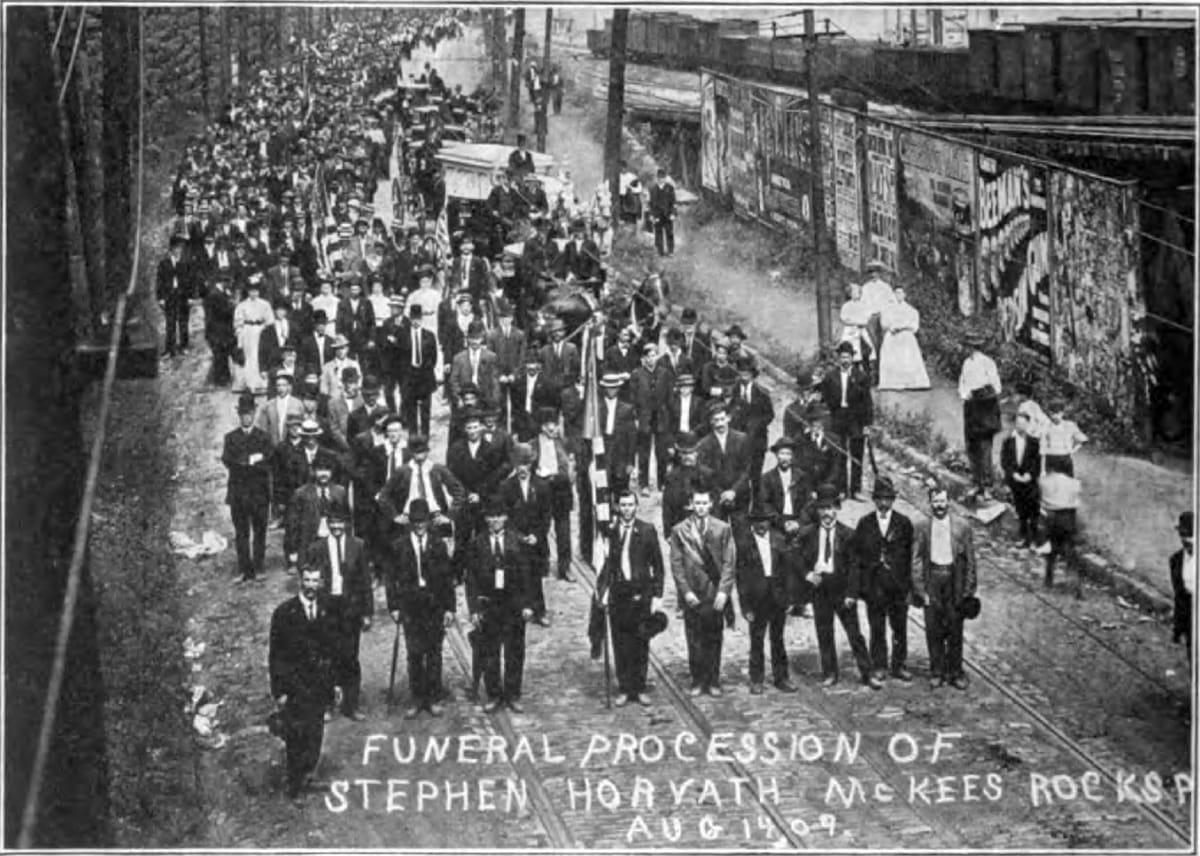
Bloody Sunday dawned bright and clear on Aug. 22, 1909.
The date marked the 41st day of a strike by thousands of workers against the Pressed Steel Car Co., which operated a McKees Rocks assembly line plant along the Ohio River, manufacturing railroad and trolley cars for customers all over the nation.
The workers, most of whom were immigrants from eastern and southern Europe, had walked out July 13 over a sudden reduction in wages. In the ensuing six weeks, two rival groups had emerged to lead the strike – a group called the Big Six, led by more skilled American-born workers, and a committee headed by the Industrial Workers of the World, or IWW, which represented the interests of the foreign-born employees.
Even though it was about to become one of the deadliest strikes in Pittsburgh labor history, the McKees Rocks walkout is not nearly as well known as the Homestead Steel strike of 1892. Yet many historians believe it had just as much impact and deserves a more prominent place in our collective memory.
In that embattled summer of 1909, the recalcitrant owner of the Pressed Steel plant, Pittsburgher Frank N. Hoffstot, had not only refused to negotiate seriously with the strikers but also had ordered workers’ families evicted from company-owned housing in a neighborhood known as Presston, even when they already had paid their rent.
Then a week before Bloody Sunday, Hoffstot brought in hundreds of strikebreakers assembled by a company that specialized in that work, run by a flamboyant New Yorker named Pearl Louis Bergoff. The first boatload of strikebreakers had approached the plant on the Ohio River on Aug. 13, and they were greeted by stones and bullets. Despite that stiff resistance, Hoffstot brought in more strikebreakers the following day.
With tensions at a breaking point, many immigrant strikers on Bloody Sunday began boarding streetcars in McKees Rocks, looking for strikebreakers and other opponents of the walkout. There, they encountered sheriff’s deputy Harry Exley.
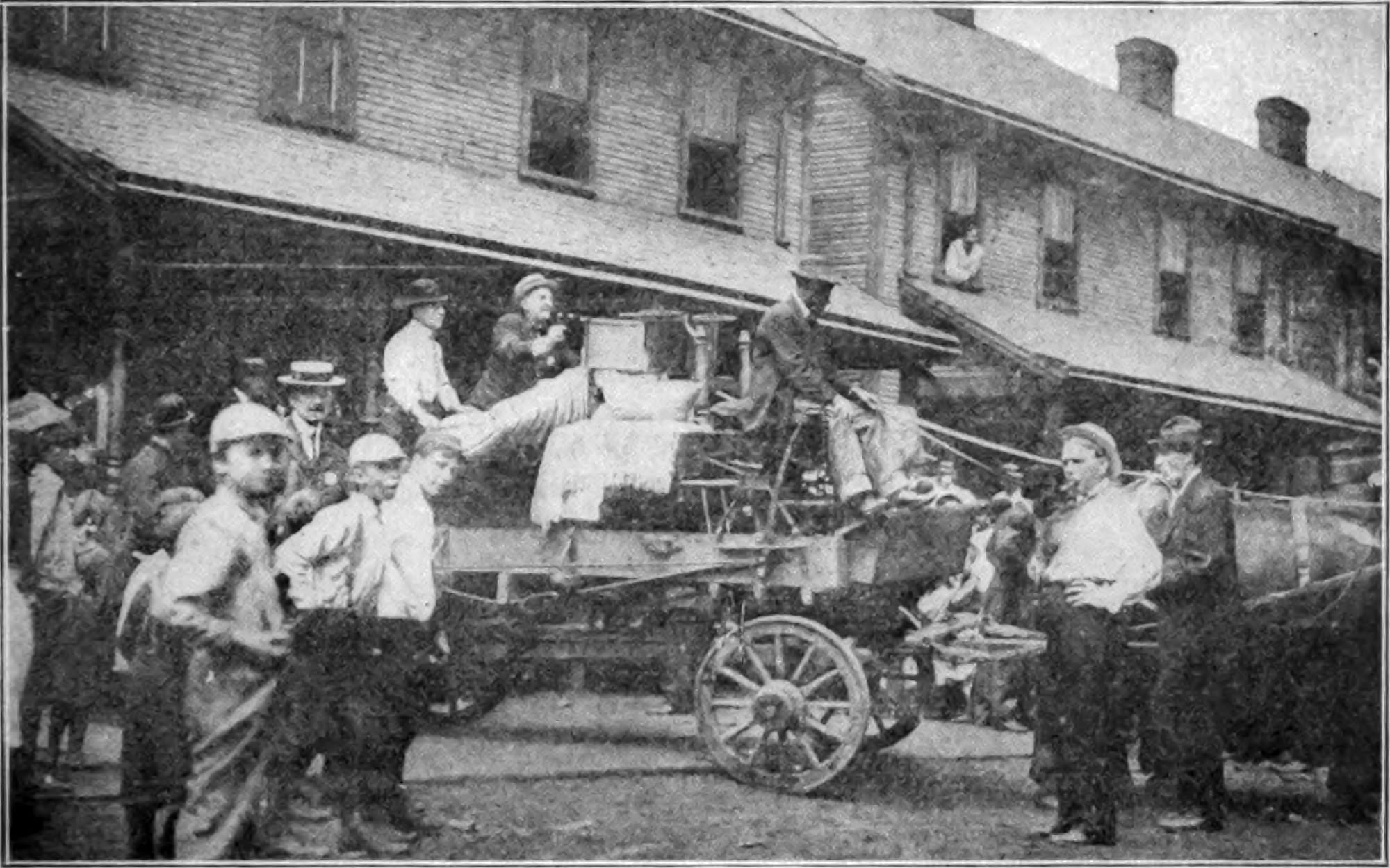
Exley had played a major role in the evictions. In one infamous newspaper photo, he was shown loading a baby carriage on top of the mound of household goods carried out of one home.
Exactly what happened next is unclear, but somehow Exley ended up outside the streetcar and fired his weapon, starting a gun battle that ended up killing Exley.
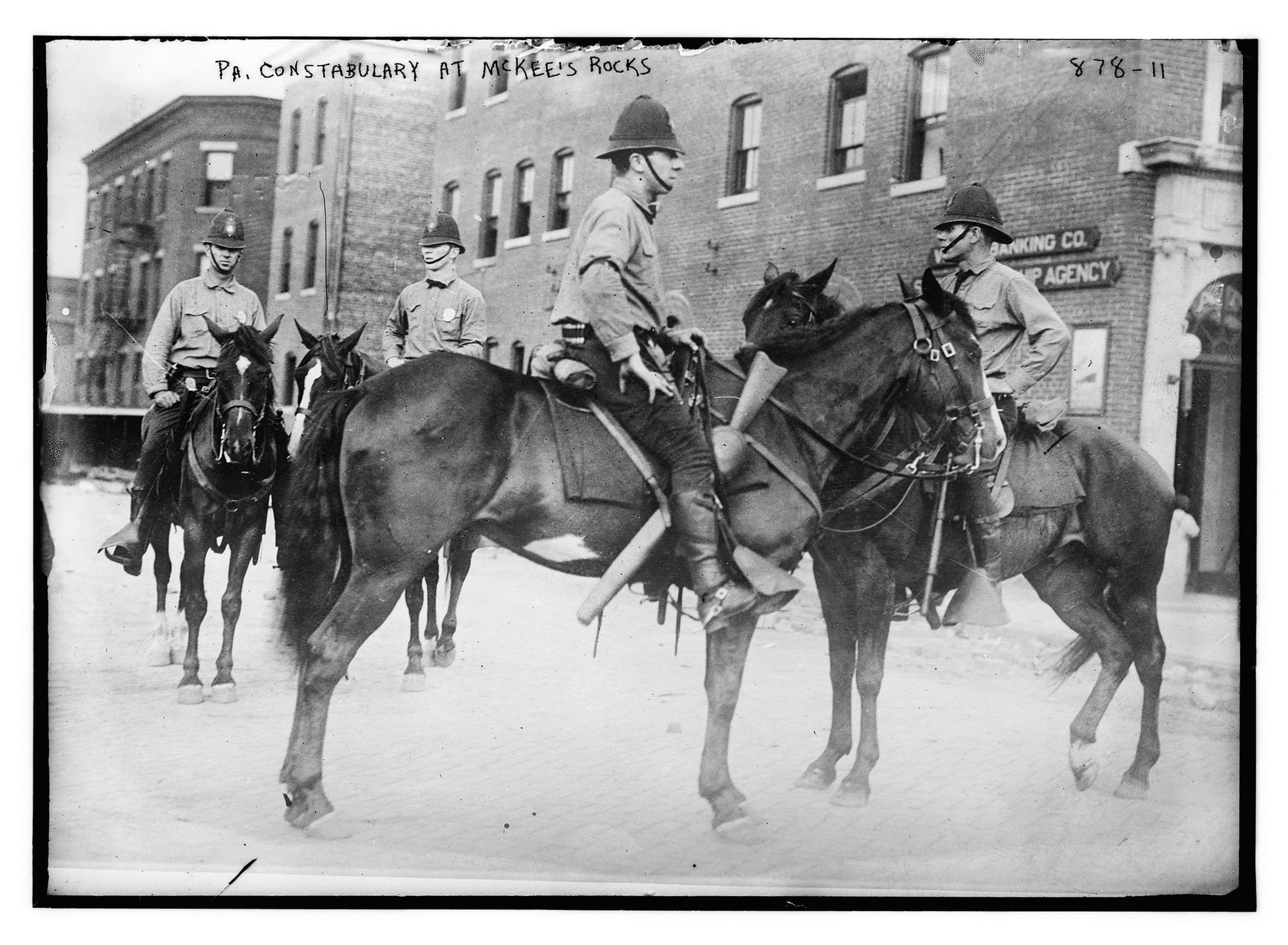
In response, state police, many on horseback, rushed to the scene and began attacking strikers. That led to more gun battles and a push by the state police to throw more strikers’ families out of their homes the following day.
By the time the long weekend was over, an estimated 11 people had been killed, including two state police officers. More than 90 had been injured, and the tide of public opinion in Pittsburgh among wealthier residents had started to shift against the strikers.
While this was the most violent moment in what turned out to be 10-week strike, it was only one chapter in a convoluted battle that not only pitted an arrogant owner against his workers, but also aggravated the rivalries that already existed between more skilled American-born workers and the Poles, Croatians, Slavs, Hungarians, Russians, Carpatho-Rusyns, Italians and other immigrant workers who got lower wages and who were much more likely to be injured or killed by unsafe practices in the plant.
Looking back from a vantage point 117 years later, it is clear that the Pressed Steel Car Co. strike was one of the most important walkouts in the history of labor organizing in Pittsburgh and the nation – and, to this day, one of the most overlooked.
How it began
Long before the strike, the Pressed Steel plant was known for how dangerous it was. Located in what is now the McKees Rocks Bottoms area west of the McKees Rocks Bridge, the plant used cranes to move the frames of cars from one spot to another, and many workers were killed or injured in the process. One former coroner claimed there was a death per day at the plant, and even though that was probably hyperbole, there were easily 40 fatalities a year, said Charles McCollester, a retired professor of industrial and labor relations at Indiana University of Pennsylvania.
Before the summer of 1909, unskilled workers at the Pressed Steel plant were paid based on how many car components each of them completed, which rewarded the most productive employees. It also meant they knew ahead of time what they could earn.
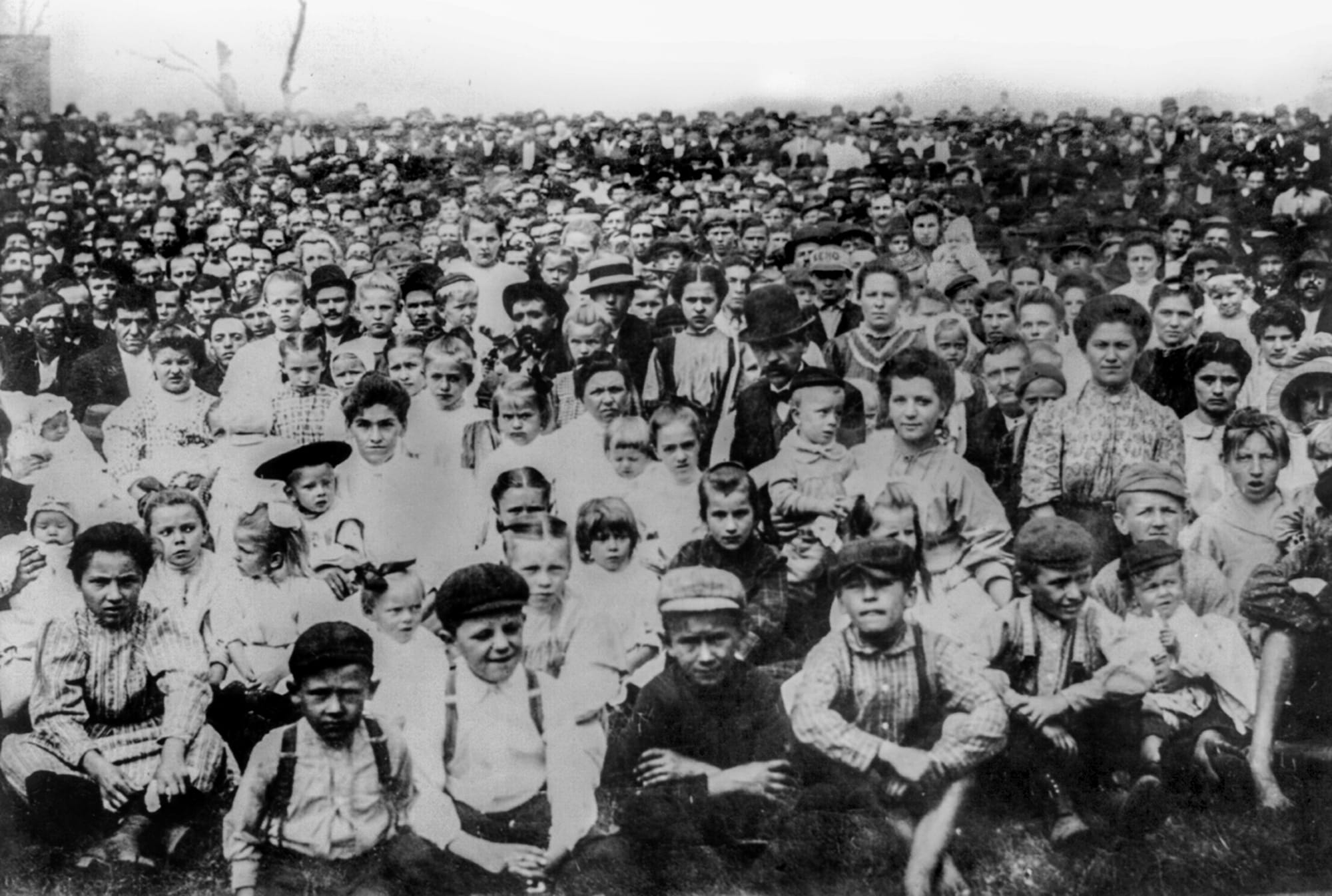
According to former University of Pittsburgh history professor John Ingham, that all changed when Hoffstot decided to switch to a pooled payment system in the name of efficiency. Under that approach, foremen were allocated a certain amount for each job, and the money was then distributed equally to workers after the job was done.
But first the foreman’s pay would be deducted from the pooled sum. And then, if equipment breakdowns or slow workers made the job take longer, the net result was lower pay for each worker. Most frustrating of all, workers never knew what they would be paid until the money was distributed.
On July 10, 1909, workers saw a sharp drop in their pay under this system, and they demanded answers. The company refused to explain. That caused 600 riveters to walk off the job, and they were soon joined by most of the foreign-born employees. The 500 skilled workers initially remained on the job, but they then went on strike as well.
Larry Isaac, an emeritus professor of sociology at Vanderbilt University and an expert on early 20th century labor organizing, said that at the start of the strike "it seemed that the unskilled and skilled workers were in solidarity to some extent, but then, the skilled workers began to side with management.”
American-born workers known as the Big Six took charge of the strike committee and began meeting with owners, and in those early days of the walkout, won support from important members of the community. The wealthy Kaufmann department store family and the Pittsburgh Leader, a fairly liberal newspaper, supported the strikers and collected food to distribute to the strikers’ families, particularly the immigrants’ wives and children in Presston.
By the end of July, the Big Six happily announced to the immigrant strikers that they had a tentative deal – the company would end the pooled pay system and dismiss the hated chief of the company police force, T.A. Farrell.
But then the immigrants learned the company wouldn't guarantee that all of them would be rehired and would not recognize them as a union. Feeling betrayed, they voted to remain on strike and soon invited the IWW to come to McKees Rocks to represent their interests. Hoffstot responded by throwing more families out of company housing and stepping up plans to bring in strikebreakers.
Exploiting the same people
In August, Hoffstot turned to the services of Bergoff Brothers Strike Service and Labor Adjusters in New York City.
The firm owed its existence in part to one of the owners’ connections to another piece of Pittsburgh history.
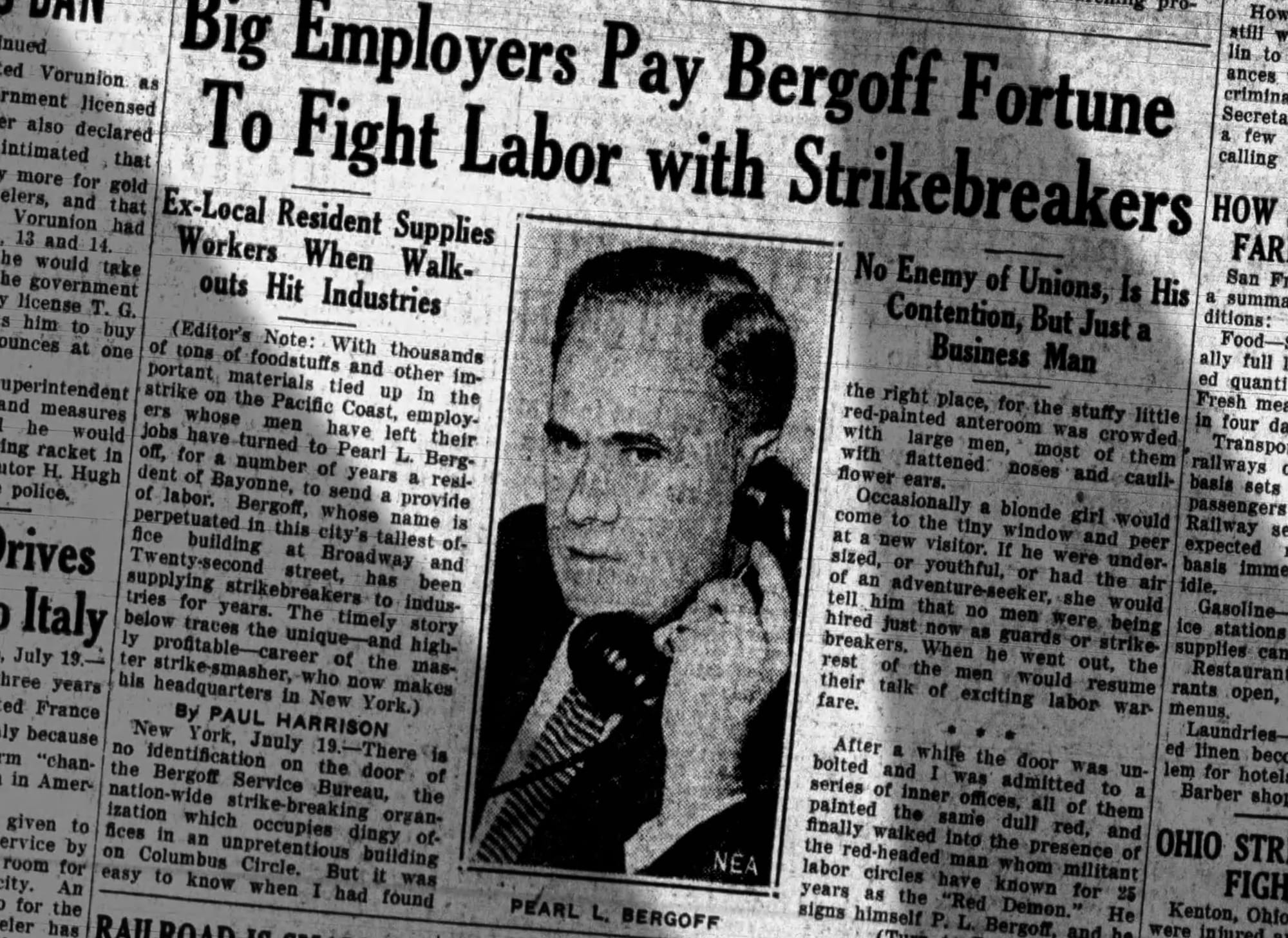
Pearl Louis Bergoff (his mother reportedly wanted a girl) had served as a bodyguard to famous New York architect Stanford White, who was shot to death on the rooftop of Madison Square Garden in 1906 by Pittsburgh millionaire Harry Thaw.
Bergoff reportedly raised the money to start his own strikebreaking agency by selling a diary to the New York World that contained details of White’s relationship with former showgirl Evelyn Nesbit of New Kensington. Thaw had married Nesbit and then became obsessed with the fact that White had raped Nesbit when she was still a teenager.
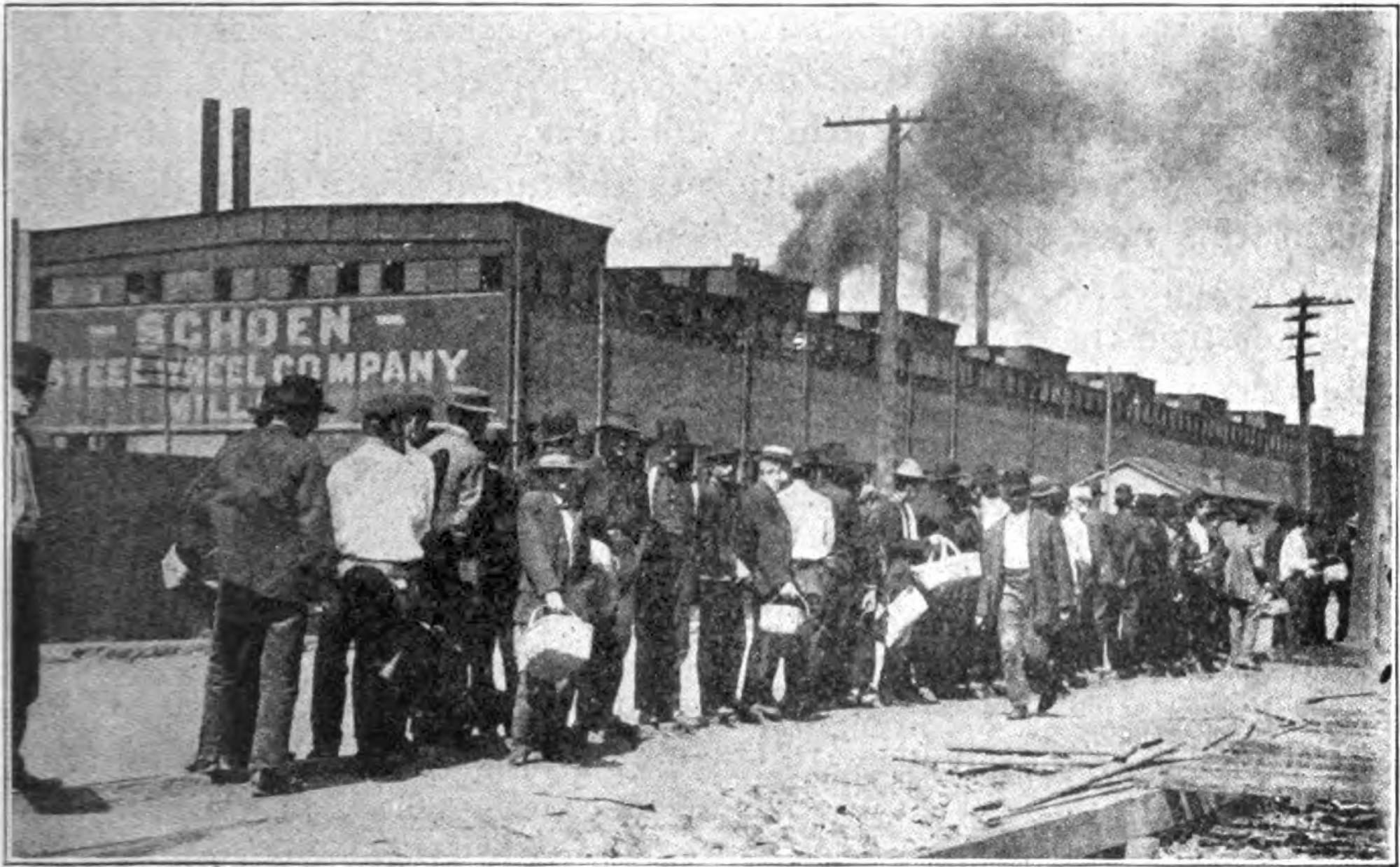
When Bergoff’s strikebreakers arrived in McKees Rocks in August 1909, they soon began complaining about the same kind of mistreatment as the men they were hired to replace. Just a week after Bloody Sunday, about 200 of the 650 strikebreakers quit work and began camping out on the banks of the Ohio River.
Attorney William McNair, who would later serve as mayor of Pittsburgh, represented both the strikers and the renegade strikebreakers, and he helped file charges of peonage against the company – essentially, allegations that the Bergoff agency had enslaved the strikebreakers against their will.
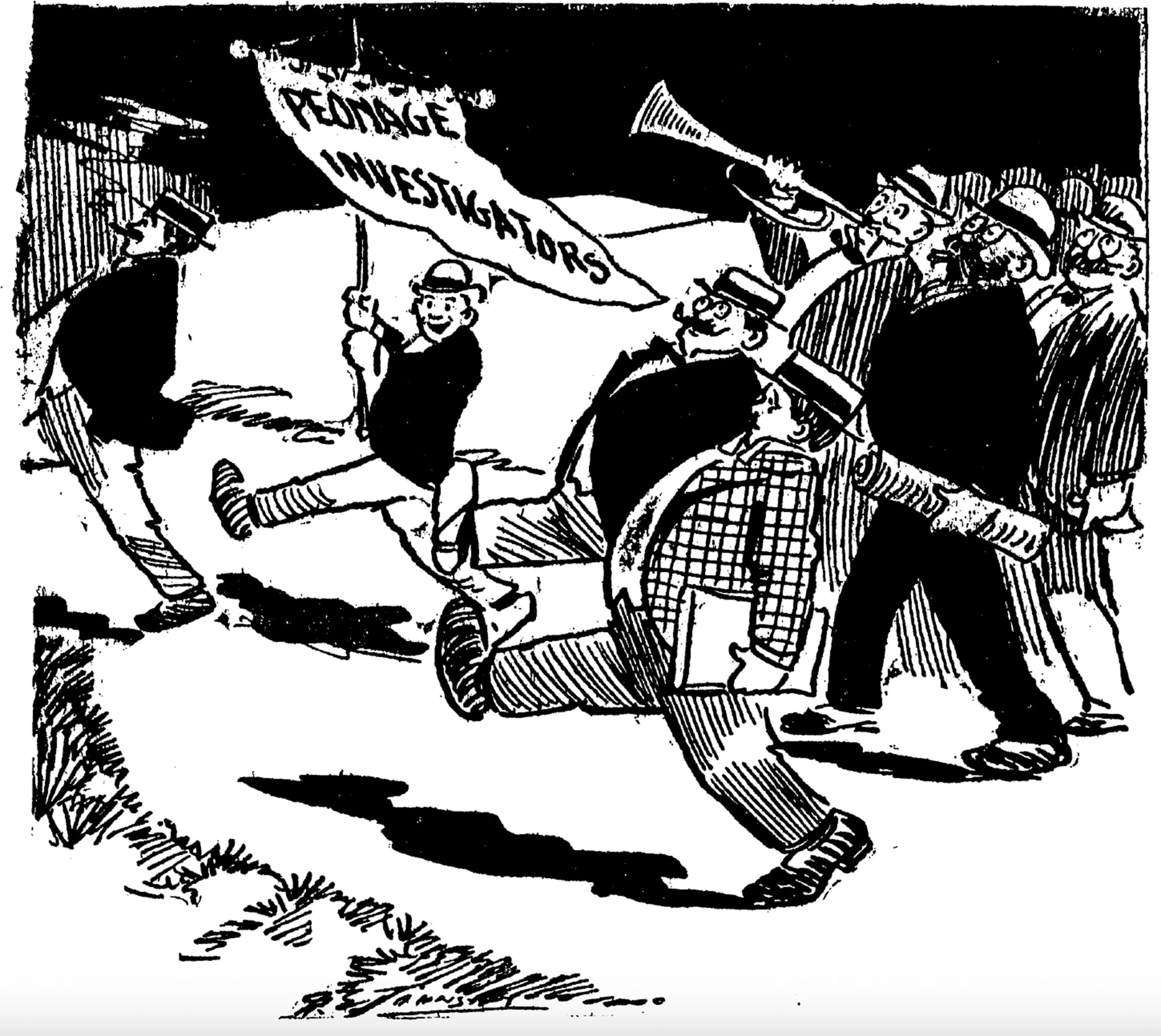
During sworn testimony, the strikebreakers said that when they were hired in New York, they weren’t told they were being employed as strikebreakers and didn’t even know where they were being taken.
One man, L.J. Caroll, said the strikebreakers were packed tightly together on a train to Pittsburgh and were given nothing to eat for 24 hours. During a stop in Philadelphia, he told a Bergoff guard that he had severe stomach cramps, and the guard said, “If you don’t get away and sit down and keep quiet, you will have cramps in the head.”
Once Caroll arrived at the plant, he told a Bergoff official he wanted to “get out of here.” He said the official replied, “Yes, you are going to get out of here when you pay me $10.50 for bringing you here” – the equivalent of more than $350 in today’s dollars. In an August 1911 House Committee on Labor hearing, McNair said that there was a fence built around the plant, and the strikebreakers “were not allowed to leave the stockade. There were two lines of guards inside the stockade, and those men who were brought in there from the various states were marched in there in a crowd and were kept there under guard, and whenever a man would try to get out they would bring him back.”
That makes it all the more remarkable that a large portion of the strikebreakers managed to break out of the plant and set up a grievance committee.
Isaac said that the Pressed Steel strike was one of many in that era in which strikebreakers and strikers alike were exploited by the owners and the strikebreaking companies.
“On many occasions, strikers and those recruited to break their strikes came from similar social backgrounds – that is, ethnic groups already working in American factories against immigrants with similar cultural backgrounds just recruited off the ships, as in the McKees Rocks strike,” the Vanderbilt professor wrote.
“The key point is that they were all working-class men, but capitalists would use the most vulnerable as strikebreakers to undermine solidarity, making the position of those raising their voices at work more precarious.”
Pittsburghers are sometimes taught that the failure of the Homestead Steel strike in 1892 killed off industrial unions for decades. The McKees Rocks strike is just one example of the many labor uprisings that still took place in the first decades of the 20th century, though.
Isaac said there were about 3,000 strikes a year nationally during this period in steelmaking, coal mining and other industries – despite the absence of national unions in most industries – and many were violent. Because there were no comprehensive federal laws at the time guaranteeing workers the right to organize, owners were able to be much more aggressive in how they treated strikers, often using local and state police as enforcers. It would take until the Roosevelt administration in the 1930s before national labor organizing laws were enacted.
Also, Bergoff Brothers was far from alone in its activities. There were 250-300 companies engaged in strikebreaking work in the early 20th century, Isaac said.
The impact of the strike
In the end, the immigrant workers in McKees Rocks got little material benefit from the walkout.
The rebellion by the strikebreakers did finally force Hoffstot to agree to make concessions. Company officials told C.A. Wise, head of the Big Six, the plant would give the men Sundays off, half days on Saturdays and an “eventual” pay raise. But when the workers re-entered the plant in September, they found that Sundays off wouldn’t be implemented right away, no pay increase was forthcoming, and Farrell, head of the company police, was still in charge.
On Sept. 15, most of the immigrant workers, feeling betrayed, again laid down their tools and rallied outside the plant. But two days later, the native-born workers armed themselves and marched through the gates carrying a huge American flag. The angry immigrant workers were forced to give way, and soon everyone was back at work.
It might seem, then, that the Pressed Steel strike was just another case of wealthy industrialists snuffing out a courageous flame of worker rebellion. But McCollester said it actually had a broader impact.
The Pressed Steel strike was the first time that foreign-born workers in Pittsburgh stepped to the forefront and demanded fair treatment, which paved the way for their activism in steel mills and other plants in the ensuing decades.
“It was really the coming out of the eastern and southern Europeans,” the retired IUP professor said. “The eastern Europeans had been treated as dumb Hunkies and beasts of burden, but in this strike, they made huge gains in terms of gaining respect.”
In his 2008 book, “The Point of Pittsburgh,” McCollester said that, in some ways, what the McKees Rocks workers achieved was far more impressive than the much better-known Homestead strike.
“The battle of Homestead lasted from dawn to dusk,” he wrote. “McKees Rocks saw two months of sustained collective resistance in the form of mass meetings, social organization, street fighting and even gun battles.”
Visiting journalists who came to report on the strike were surprised and impressed by how organized the immigrant strikers were. When the workers gathered on the ridge overlooking the plant for rallies, they organized themselves by ethnic group, each of which had an interpreter who translated what was being said. It enabled national Socialist leader Eugene V. Debs to be understood clearly when he attended a rally of 1,000 strikers three days after Bloody Sunday.
“There are 15 nationalities represented here this morning, but you are of one class,” said Debs, who came to McKees Rocks despite death threats against him. “You are workmen, united in a single cause. ... Though I cannot understand your language, I can read your hearts and can make myself understood to you.”
The women from the immigrant families also played prominent roles in the strike, including the armed conflicts.
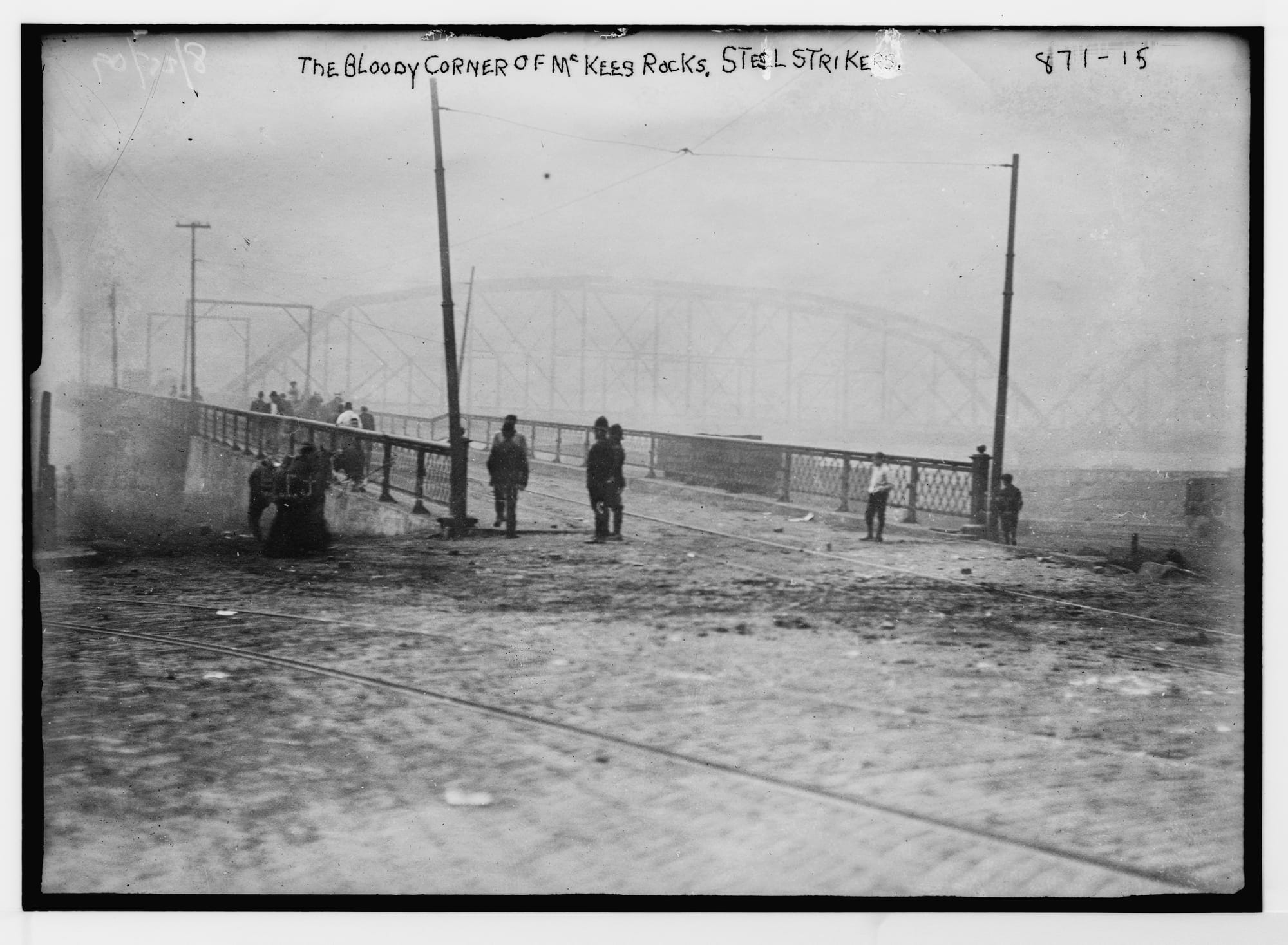
In its report on Bloody Sunday, the Pittsburgh Press reported that “after a desperate and losing fight with the wives of the strikers, the state police sought the shelter of the plant yard, leaving ... McKees Rocks in possession of the mob.”
“It was thought that the attack of the women on the troopers was part of a well-planned scheme to distract their attention and allow the men opportunity to make the most desperate attempt yet to blow up the company office," the newspaper wrote. "While the fighting was going on, a roar like a crash of thunder was heard, and investigation showed that ... a large portion of the company’s office ... had been blown up by nitroglycerine.”
The women carried an especially strong motivation for their militancy. There were widespread reports at the time that company officials forced immigrant women to engage in sexual acts in order to pay off debts or avoid evictions. The Rev. A.F. Toner, a priest at St. Mary’s Roman Catholic Church in McKees Rocks, said that in the Pressed Car plant, “men are persecuted, robbed and slaughtered, and their wives are abused in a manner worse than death.”
In the end, McCollester said, the immigrant workers were partly hampered by the policies of the IWW. The union was excellent in its ability to organize strikes, he said, but it didn’t really believe in negotiating contracts, which allowed the native-born committee to hold sway.
Still, he said, the Pressed Steel strike “signaled the definitive end of an image of the immigrants as passive drones unwilling to struggle for their rights.”
But it would take years for the immigrants to gain the respect of wealthy supporters of progressive politics in Pittsburgh, wrote Ingham, the former Pitt professor. “Both Hoffstot and the foreign strikers incurred their wrath because they refused to think in societal terms, being more interested in their own ‘selfish concerns.’
“However, Hoffstot and Pressed Steel Car were able to reach a compromise with progressive society soon after the strike, and once again basked in its favor,” Ingham wrote. "But the foreigners were doomed to be ostracized from society, at least until they had become ‘Americanized.’ ”
One final symbol of the gulf that still existed between industrial titans like Hoffstot and his immigrant workers: In the same year that the strike occurred. Hoffstot finished building his mansion on Long Island's north shore, which he named Belcaro.
Its cost? $3.4 million in today’s dollars.